Bangkok’s street food culture is built around repetition and precision. The best dishes are often cooked by vendors who have made the same thing every day for years. Knowing what to order, what a fair price looks like, and where to find the right stall separates a good trip from a random one.
Where Bangkok Street Food Happens
Street food in Bangkok is not confined to famous night markets. It is the everyday food system of the city. Understanding where each type of food cluster exists helps you eat better and spend less.
Yaowarat — Bangkok Chinatown
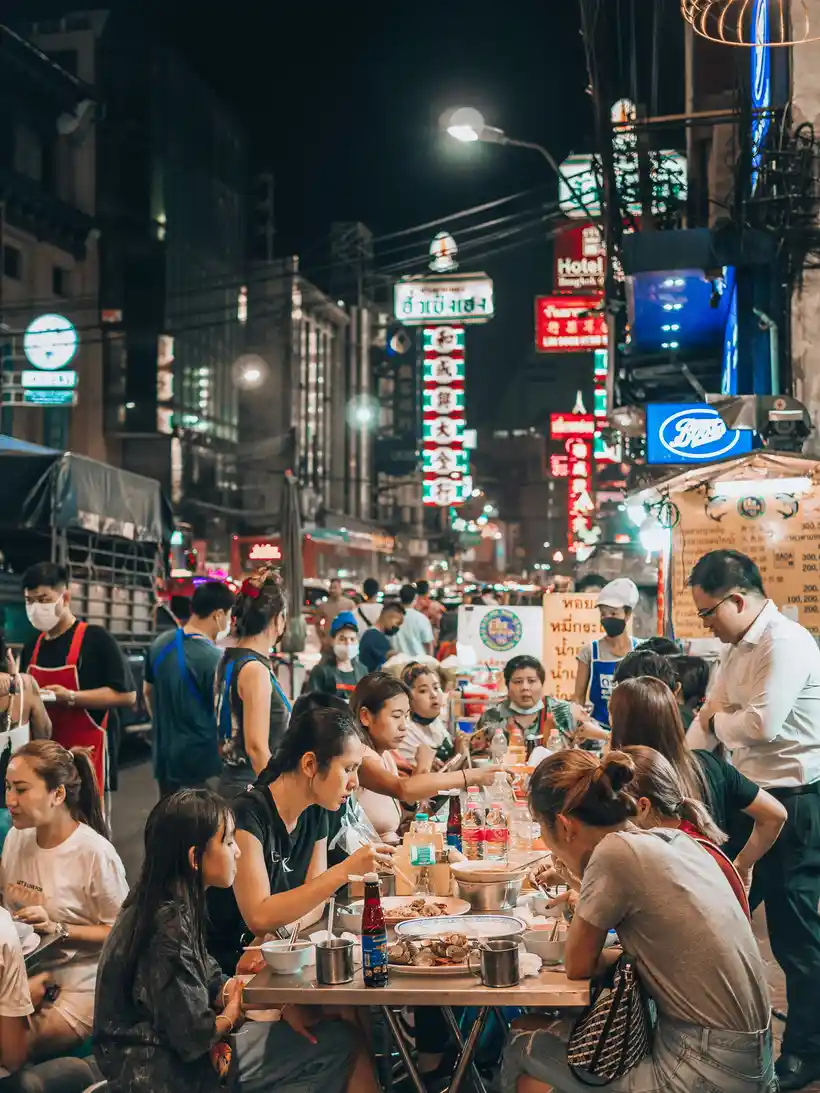
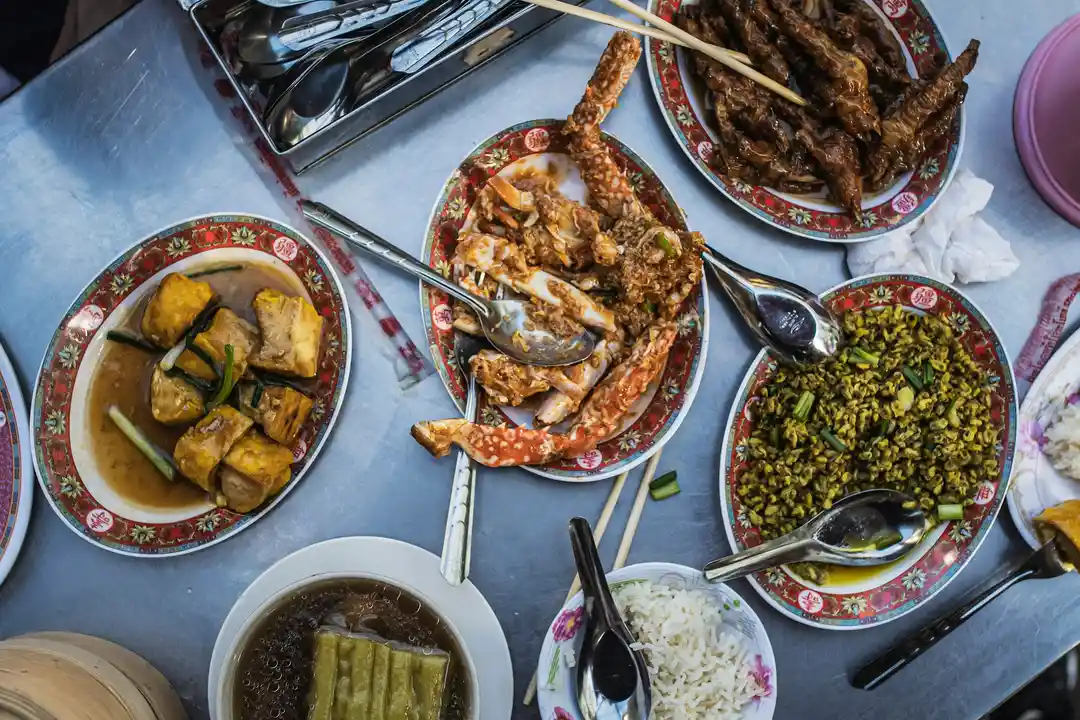
Yaowarat at night is the most photographed version of Bangkok street food. The cooking leans Chinese-Thai: roast duck over rice, braised goose, seafood grilled at the kerb, fresh oyster omelette, deep-fried soft-shell crab, and fish maw soup. Most stalls operate from late afternoon past midnight.
The area is busiest on weekends and public holidays. Arrive hungry and prepared to queue at the better-known spots.
Victory Monument
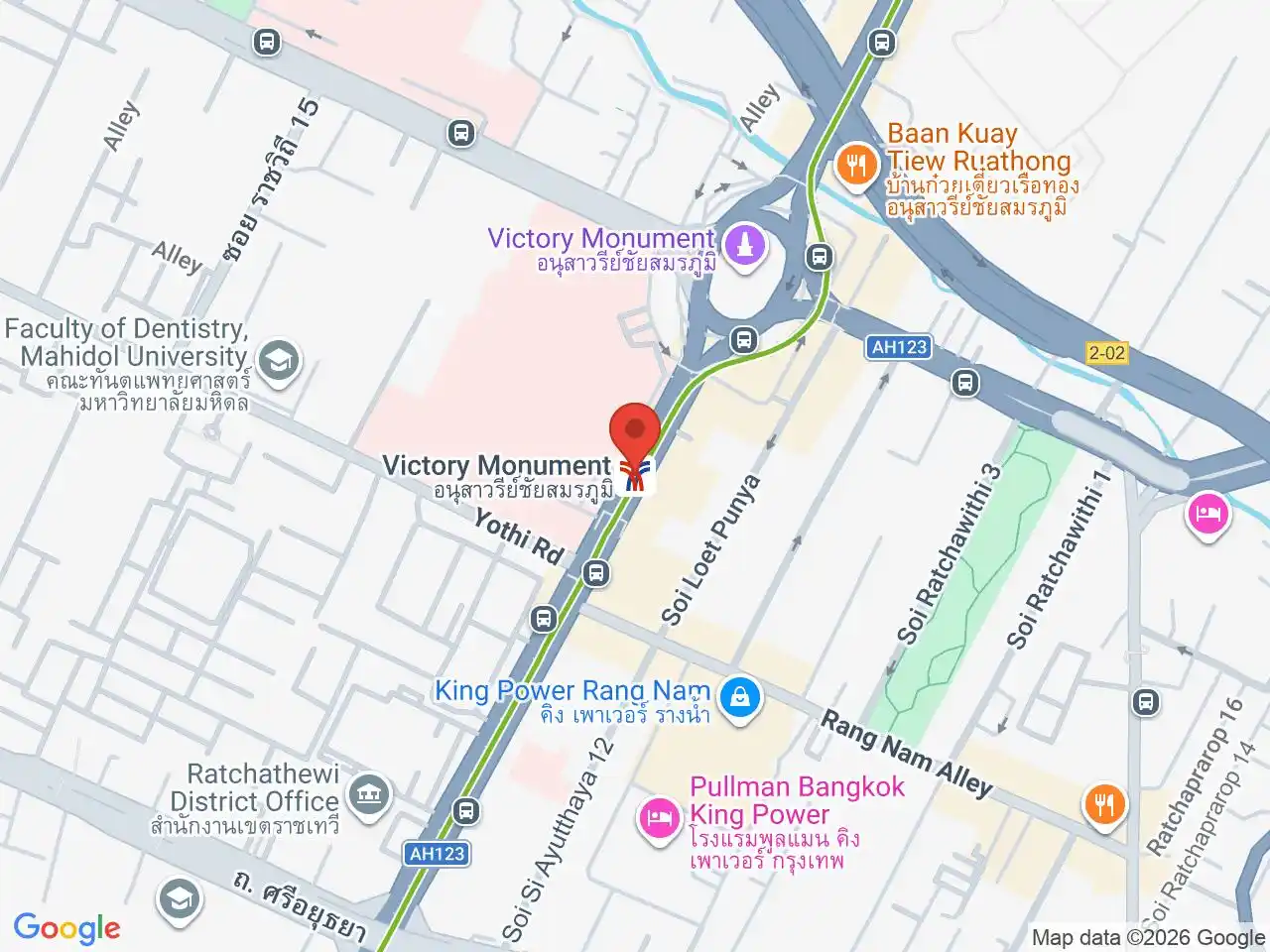
The area around Victory Monument BTS is one of the best transit-linked street food zones in the city, known for Isan-leaning food: boat noodles, grilled meats, papaya salad, and sticky rice. It is used by students, office workers, and local commuters rather than tourists, which keeps prices honest and cooking unadjusted for foreign palates.
Khao San Road
Khao San Road has the most visible street food scene for first-time visitors but is the least representative of what Thais actually eat. Pad thai, mango sticky rice, grilled skewers, and spring rolls are available cheaply and conveniently, but quality is uneven. Use it for convenience. For better food, move one or two streets away into Banglamphu or the old city.
Everyday Stalls and Shophouse Restaurants
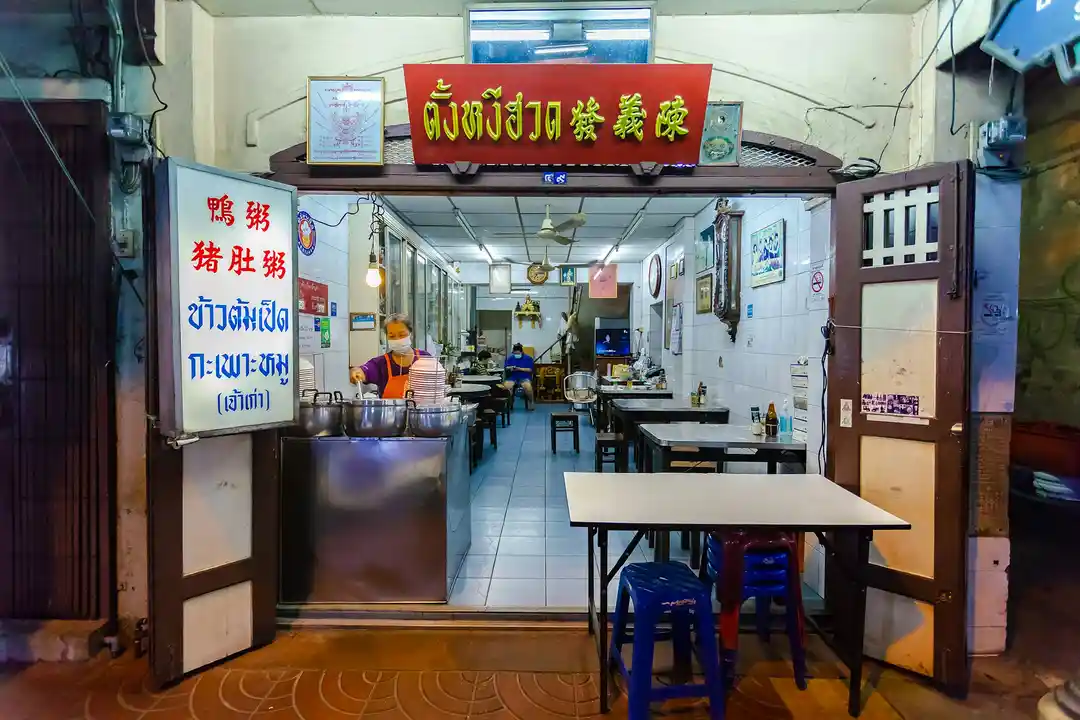
Most Bangkok street food is found at small shophouse restaurants (ran ahaan) on side streets, beside petrol stations, under expressways, and in housing estates. These are the places where office workers eat lunch, families collect takeaway, and the same regulars return to the same stall every morning. For most dishes, this is the best and most honest version of Bangkok street food.
When you want a casual sit-down meal rather than stall-hopping, use the local Thai restaurants in Bangkok guide as the next step.
Tom Yum and Thai Soups
Thai soups at street level are not the same as hotel versions. The flavors are more concentrated, the seasoning more aggressive, the bowls smaller and cheaper.
Tom Yum Kung — Hot and Sour Prawn Soup (ต้มยำกุ้ง)
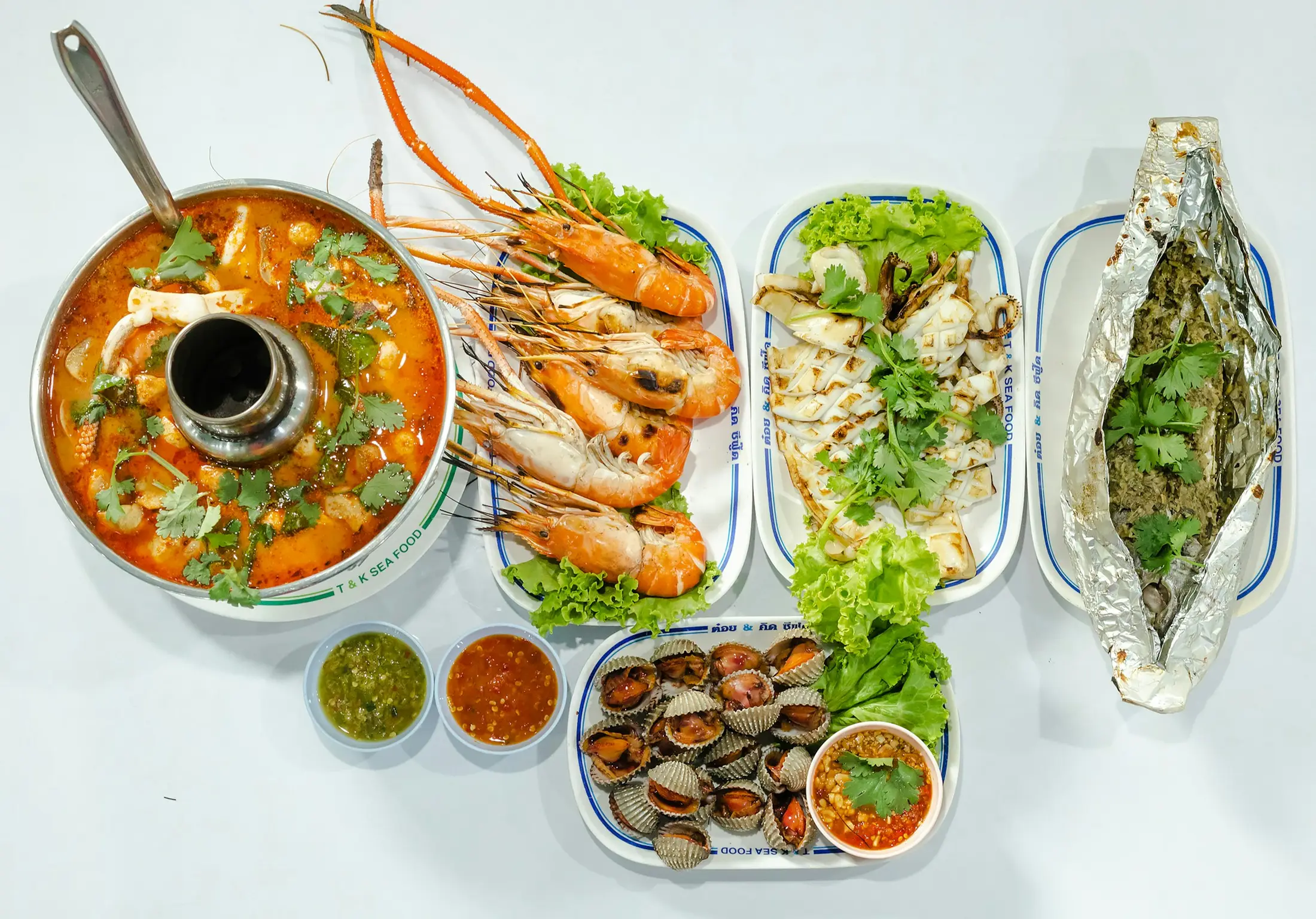
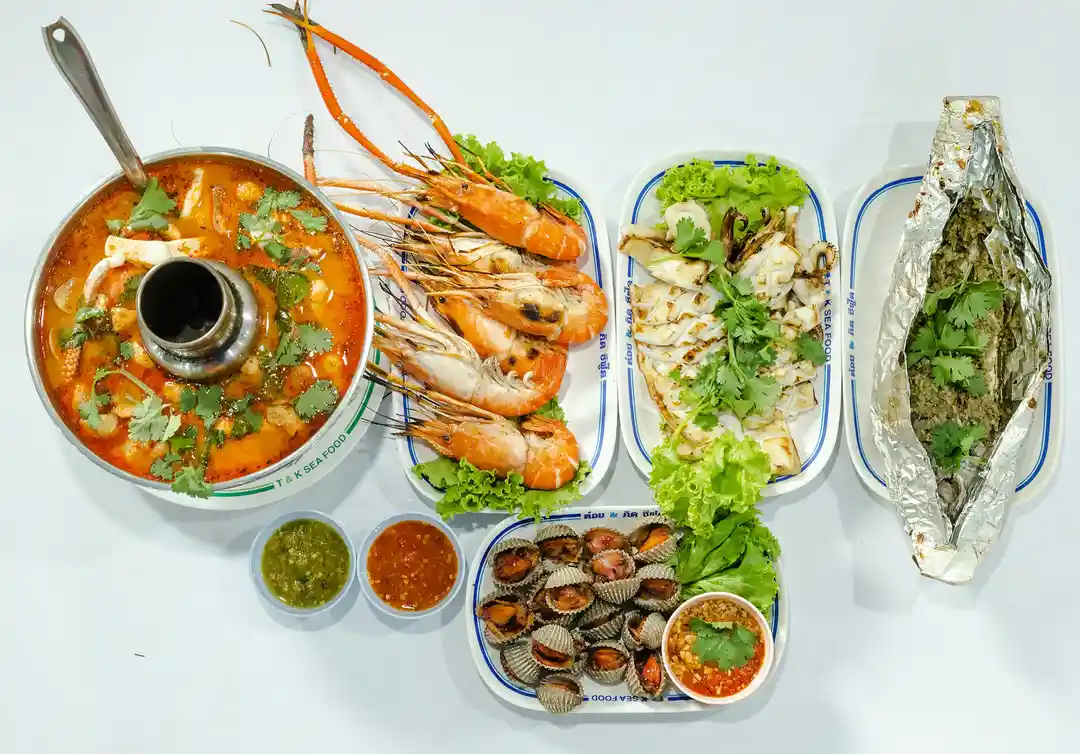
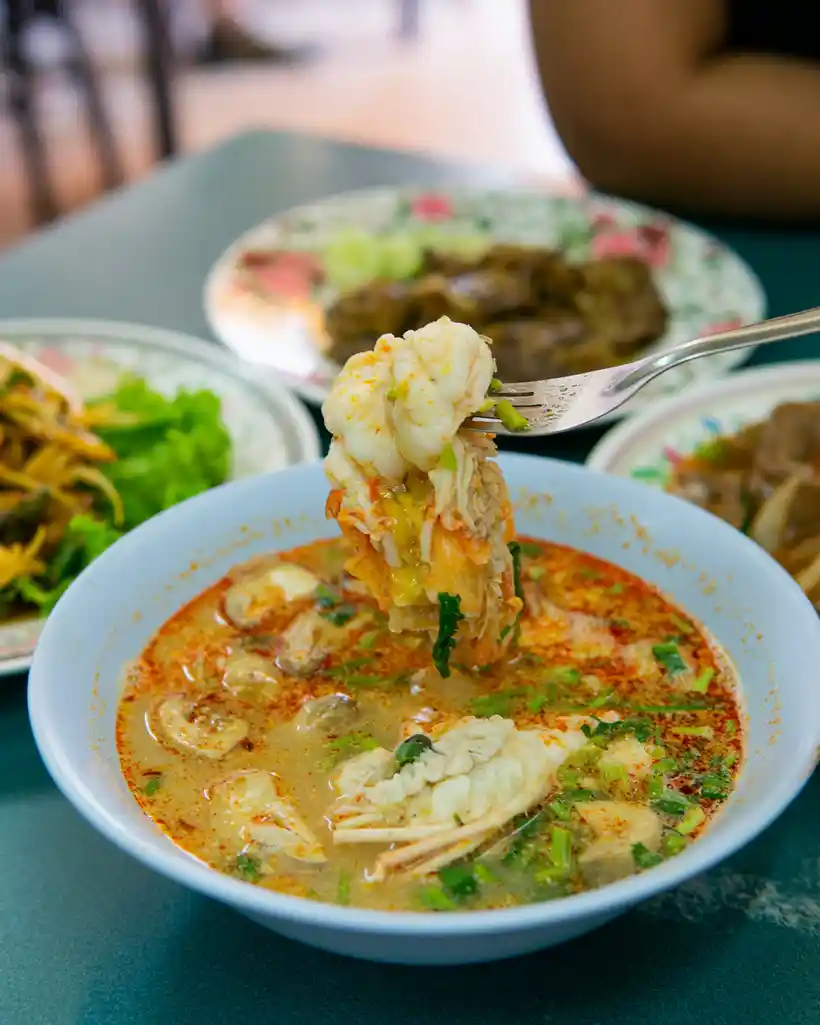
Tom yum kung is one of Thailand’s defining dishes. Whole prawns cook in a broth of lemongrass, galangal, kaffir lime leaves, mushrooms, chili, fish sauce, and lime juice. It is always sour, always hot, and strongly aromatic.
It comes in two versions. Tom yum kung nam sai (clear broth) keeps the lemongrass and galangal sharp, with a clean heat. Tom yum kung nam khon adds coconut milk or evaporated milk for a richer, creamier result. Both are authentic — preference is personal.
At a quality stall, the prawns should be large, the broth vivid orange-red from dried chilies, and the lime added at the end rather than cooked in. A bowl runs roughly 80 to 180 baht depending on prawn size and location.
Tom Yum Seafood Noodle Bowl
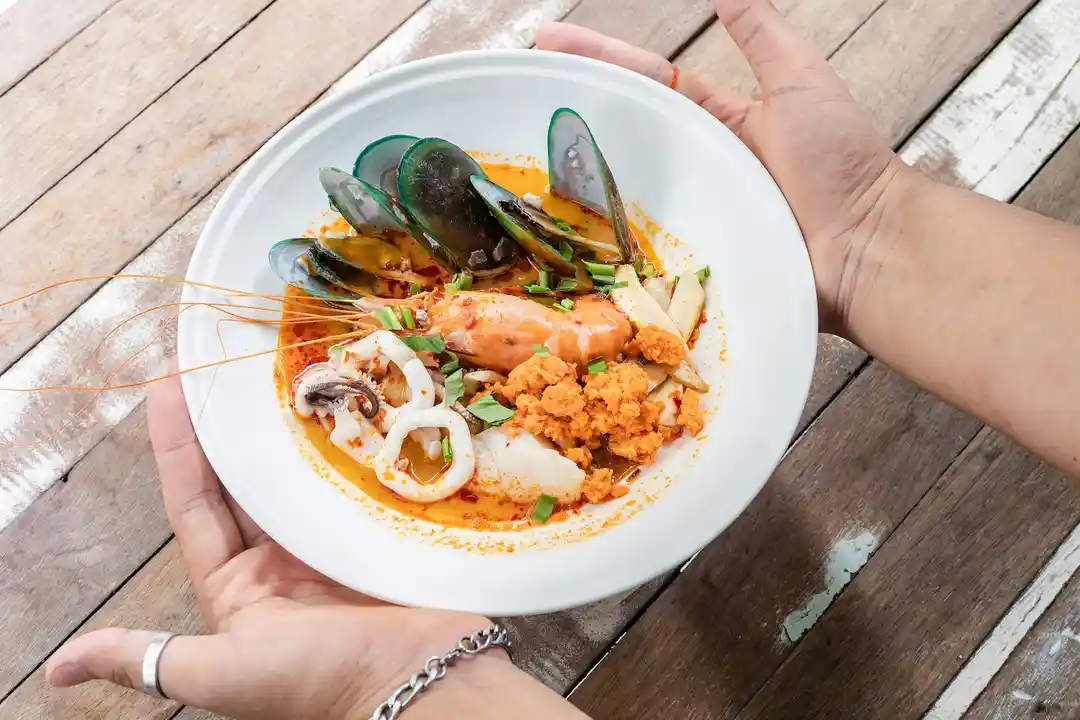
The street food version of tom yum often arrives as a noodle bowl: rice noodles or egg noodles in a sour-hot tom yum broth, topped with prawns, squid, or mixed seafood. It is a complete meal in one bowl — cheaper than a full pot of soup and practical at a standing stall.
Common at Yaowarat stalls and shophouse noodle shops across the city. Order with rice vermicelli (sen mee) for a lighter texture, or flat rice noodles (sen lek or sen yai) for something more filling.
Grilled Meats: Gai Yang, Moo Yang, and Gai Thod
The grilled-and-fried meat category is one of the most consistent across Bangkok. These are everyday meals ordered at stalls with a charcoal grill out front, almost always accompanied by sticky rice and papaya salad.
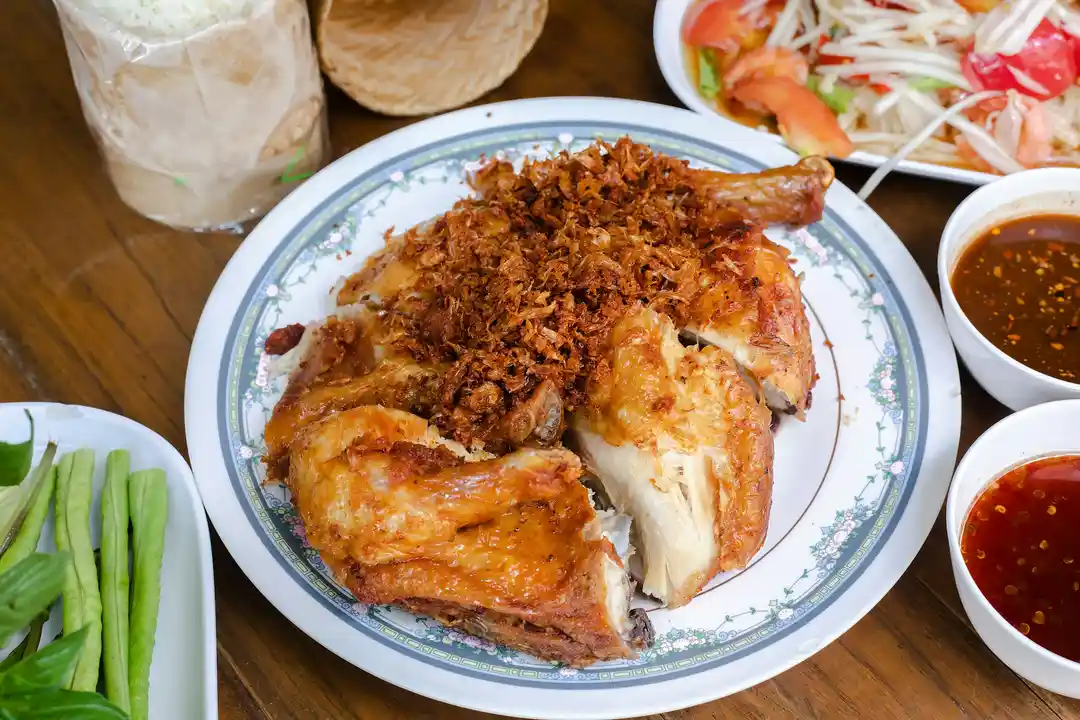
Gai Yang — Grilled Chicken (ไก่ย่าง)
Gai yang is whole chicken halved and grilled slowly over charcoal. The marinade typically includes garlic, coriander root, lemongrass, and white pepper — sometimes coconut milk or oyster sauce depending on regional style. The skin should carry some char; the meat should stay moist.
It is served with nam jim jaew: a smoky, sour dipping sauce made from toasted dried chilies, tamarind paste, fish sauce, and palm sugar. Sticky rice and som tam are almost always ordered alongside it.
Good gai yang comes from Isan food stalls and markets across the city. The quality indicator is simple: a real charcoal grill, not an electric one.
Moo Yang — Grilled Pork (หมูย่าง)
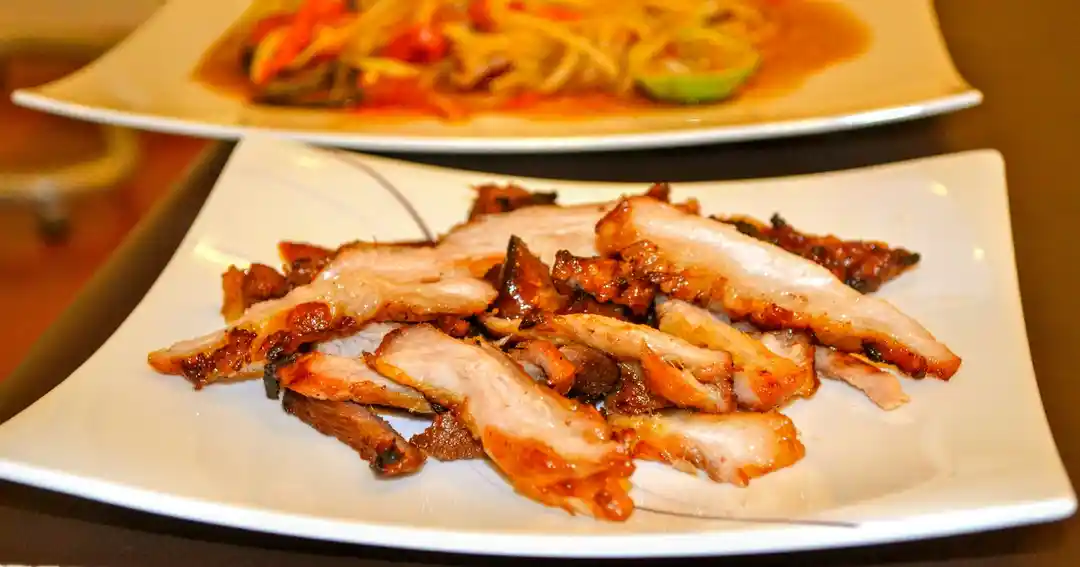
Moo yang uses pork neck (moo kor) or belly, sliced and grilled in strips or on skewers. The marinade is typically sweeter than gai yang — often garlic and oyster sauce-based — and the pork should be slightly caramelized at the edges.
Like gai yang, it pairs with sticky rice, som tam, and nam jim jaew. It is a common breakfast and lunch option at market stalls across Bangkok.
Gai Thod — Fried Chicken (ไก่ทอด)
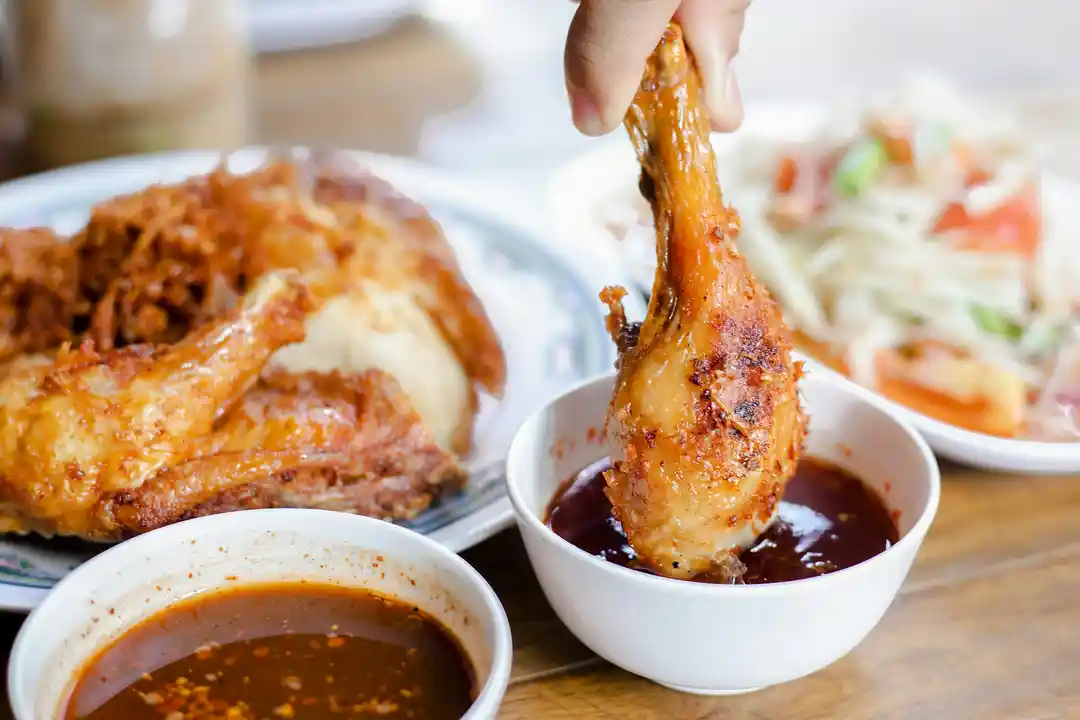
Gai thod is deep-fried Thai chicken: marinated in garlic, coriander root, and fish sauce, then fried until very crispy. The result is crunchier and more deeply seasoned than Western fried chicken.
A typical stall order is half a bird or a plate of wings, served with papaya salad and sticky rice. The dipping sauce varies — sweet chili at some stalls, a sharper lime and fish sauce mix at others.
Rice Dishes: Khao Moo Daeng, Khao Na Moo, and Massaman
Rice dishes from dedicated stalls are the backbone of everyday Bangkok eating — complete meals with rice as the base and a prepared topping applied to order.
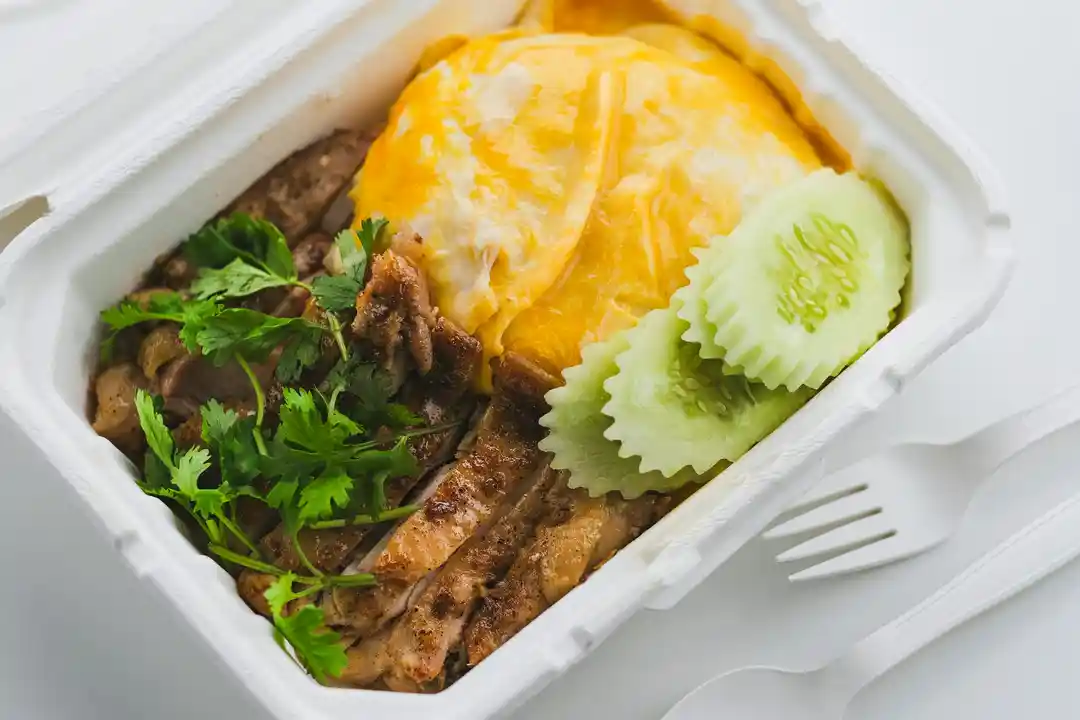
Khao Moo Daeng — Red Pork Rice (ข้าวหมูแดง)
Khao moo daeng is one of Bangkok’s most common lunch dishes. Steamed rice is topped with char siu-style red pork (moo daeng) — sometimes combined with crispy roasted pork (moo krob) — sliced and arranged over the rice, finished with a sweet-savory red gravy and a boiled egg. A chili-vinegar dipping sauce sits on every table.
The dish is Chinese-Thai in origin and found at stalls with hanging roasted meats visible in the front window. A basic portion costs 60 to 90 baht. The takeaway box version — rice, pork, and gravy in a foil tray — is one of the most common office lunch orders in the city.
Khao Na Moo — Braised Pork Rice (ข้าวหน้าหมู)
Khao na moo is the braised equivalent. Pork belly is slow-cooked in dark soy, five-spice, and sugar until very tender, and the braising liquid reduces into the sauce: darker and more savory than the khao moo daeng gravy.
Served over rice with a boiled egg and sometimes pickled mustard greens. A stall portion usually costs 50 to 70 baht.
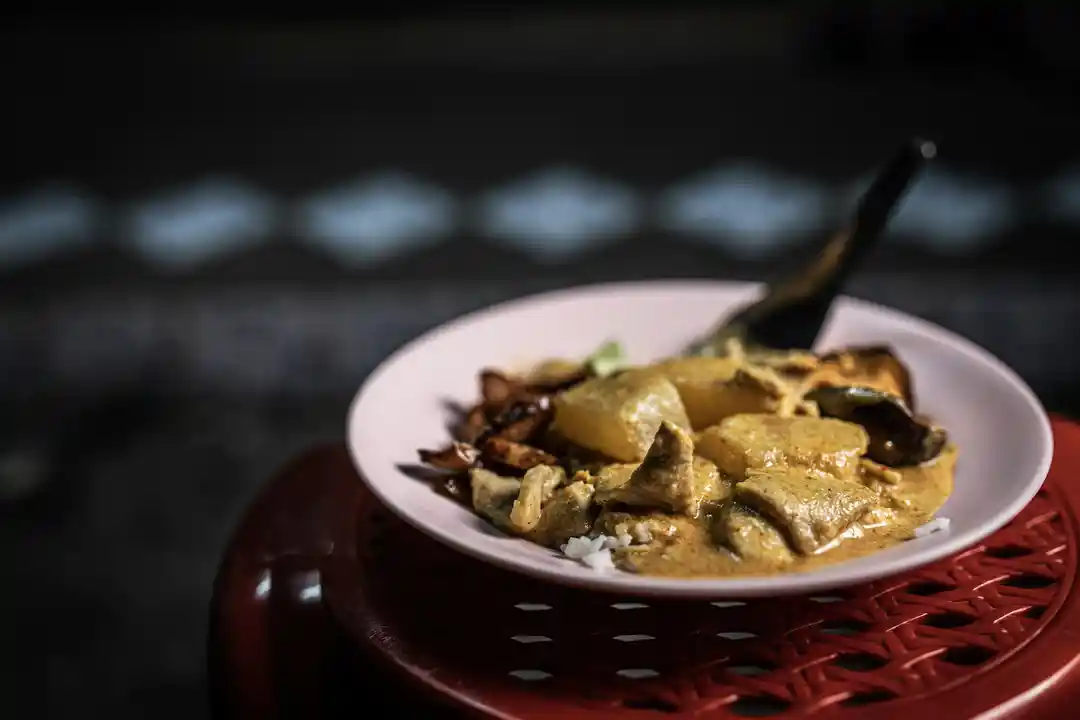
Massaman Curry — แกงมัสหมั่น
Massaman is the mildest and richest of Thai curries. The paste uses dried chilies, galangal, and lemongrass alongside warm spices — cinnamon, cardamom, cloves — that reflect the dish’s Muslim origins in southern Thailand and centuries of Indian Ocean trade influence. Peanuts and potato cook into the curry alongside beef, chicken, or sometimes lamb.
At street level, massaman over rice is a shophouse staple served by the ladle, not assembled to order. It is not spicy, making it a reliable option when navigating a Thai stall for the first time.
Noodles and Curry-Based Dishes
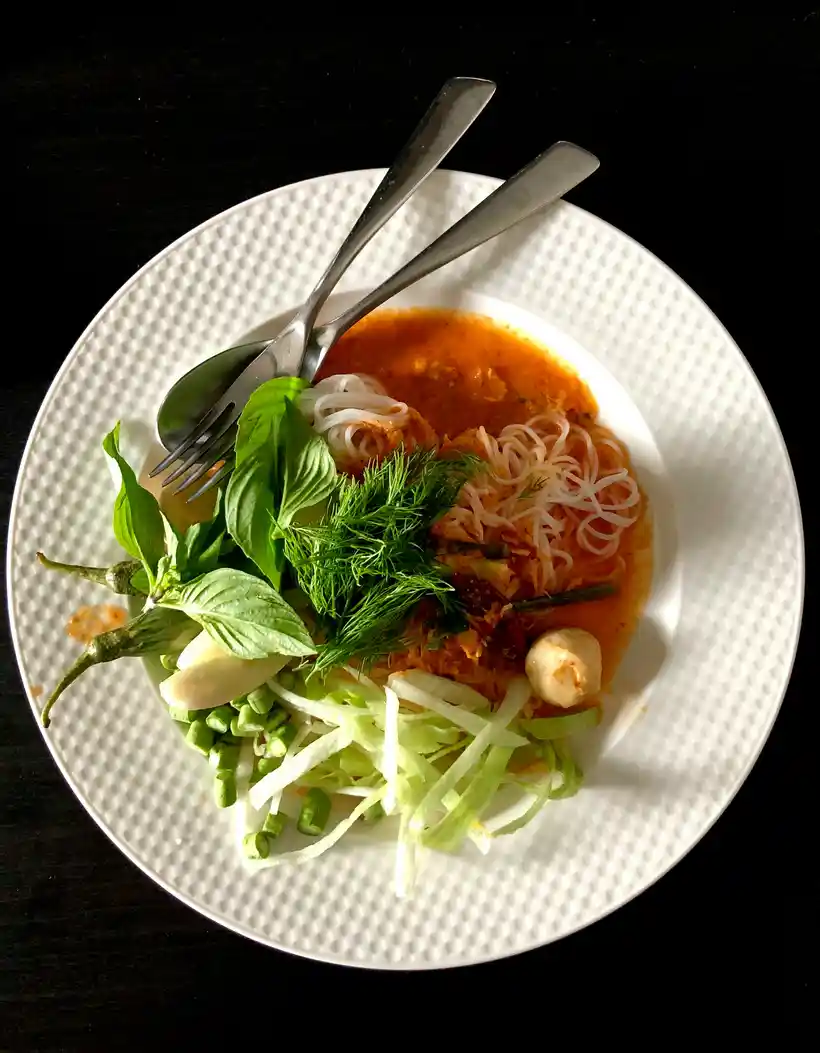
Khanom Jeen Nam Ya — Fermented Rice Noodles with Fish Curry (ขนมจีนน้ำยา)
Khanom jeen are soft, slightly sour fermented rice noodles served at room temperature and topped with a choice of sauces. The most common is nam ya — a cooked fish-based curry paste sauce that is mild, earthy, and slightly thick. Nam ya pa is the jungle version using fermented fish (pla ra), arriving with a sharper and more pungent character.
It is primarily a morning and midday dish. Stalls pile the noodles in round mounds and let customers ladle sauce themselves, alongside a spread of fresh vegetables, bean sprouts, long beans, and herbs.
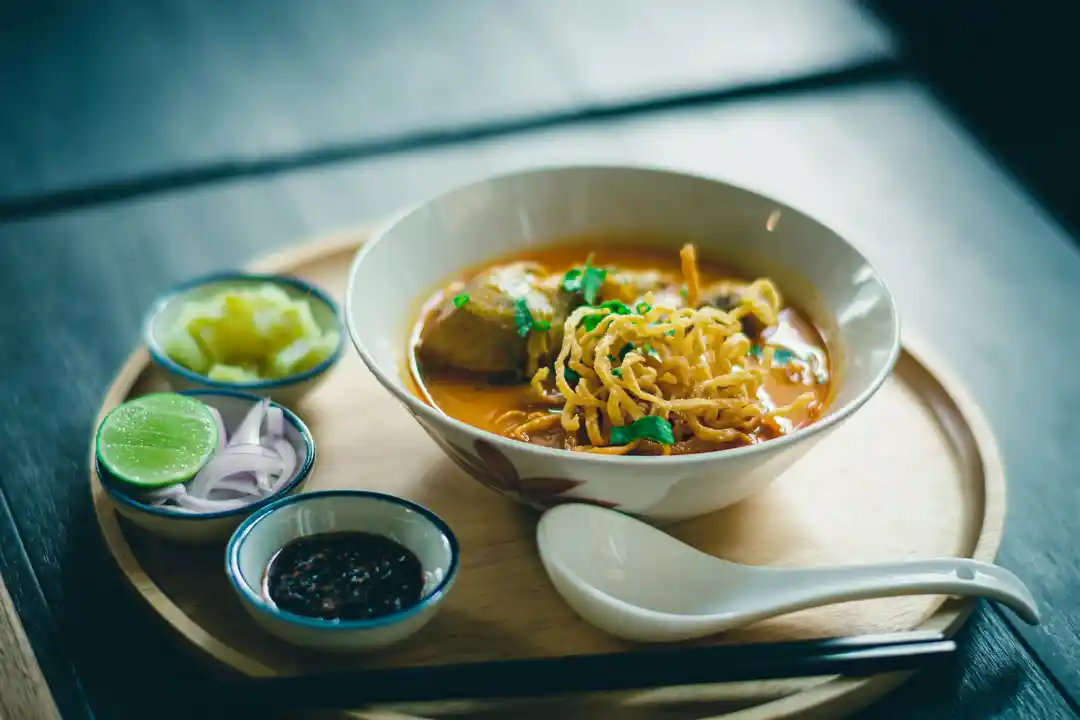
Khao Soi — Northern Thai Curry Noodle Soup (ข้าวซอย)
Khao soi originates from Chiang Mai but is widely available in Bangkok. Egg noodles arrive in two states simultaneously: some soft in a creamy coconut milk curry broth, others deep-fried into a crispy garnish on top.
The curry is turmeric-yellow, milder than central or southern Thai curries, and usually made with beef shank or chicken. It comes with pickled mustard greens, shallots, and dried chili oil on the side. Not as ubiquitous in Bangkok as in Chiang Mai, but easy to find at northern Thai restaurants and food courts.
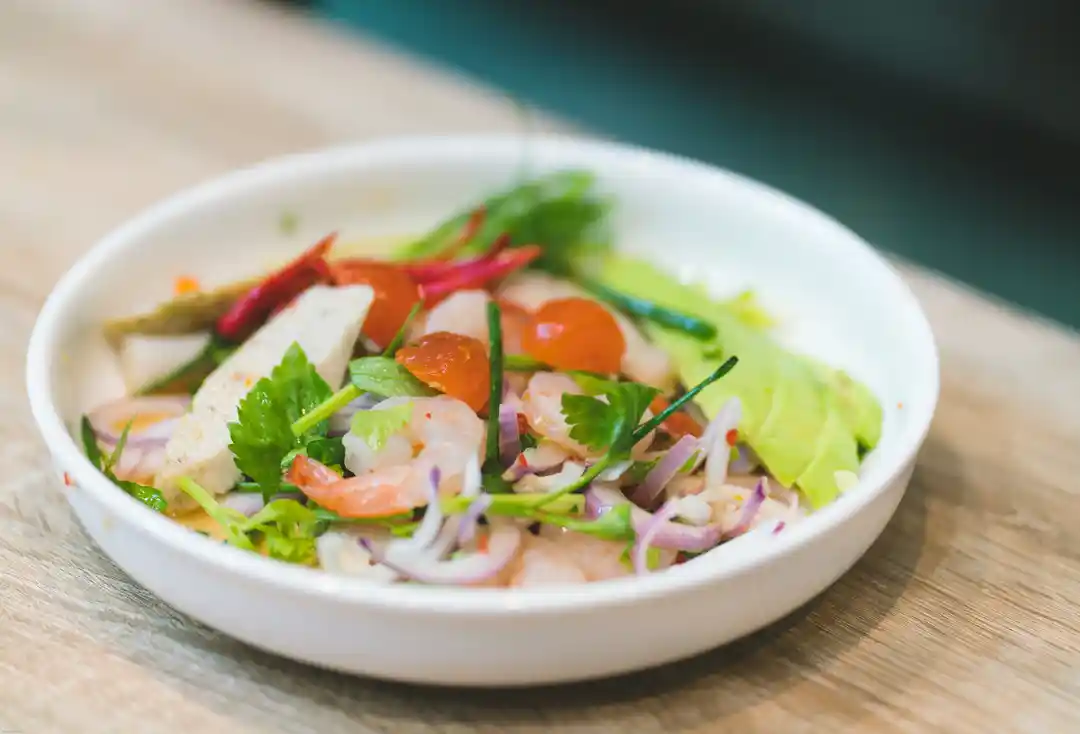
Yum Woon Sen — Spicy Glass Noodle Salad (ยำวุ้นเส้น)
Yum woon sen is a salad of softened glass noodles (woon sen), minced pork, prawns, toasted dried shrimp, onion, coriander, and celery, dressed with fish sauce, lime juice, and fresh chili. It is sour, spicy, and lighter than a curry or soup — useful as part of a shared spread or as a standalone lunch. A plate costs around 80 to 120 baht.
Som Tam, Oyster Stalls, and the Street Seafood Table
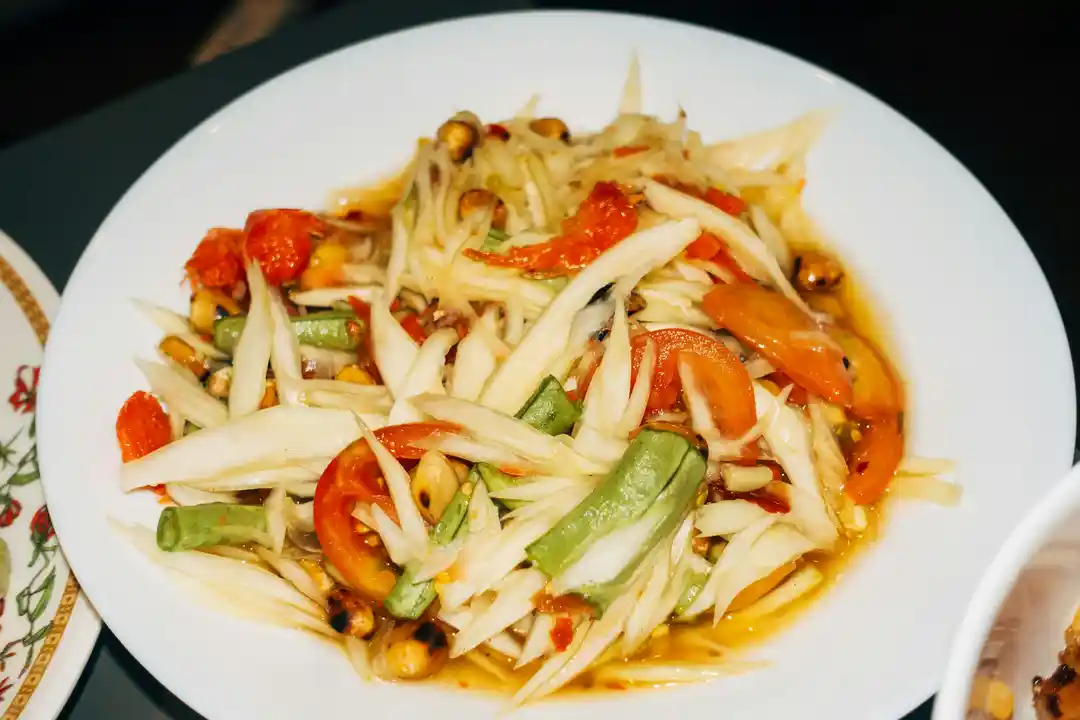
Som Tam — Green Papaya Salad (ส้มตำ)
Som tam is shredded unripe green papaya pounded in a clay mortar with tomatoes, green beans, garlic, chili, dried shrimp, peanuts, fish sauce, lime, and palm sugar. The result is spicy, sour, sweet, and salty in the same mouthful.
Som tam thai (with dried shrimp and peanuts) is the most familiar version for non-Isan visitors. Som tam poo adds fermented blue crab, making it saltier and more pungent. Som tam lao or som tam pu pla ra replaces regular fish sauce with fermented fish sauce (pla ra) — the strongest version, popular at Isan-focused stalls.
Som tam is made to order. Most stalls let you specify heat level and whether to include fermented elements. A standard portion costs 50 to 80 baht.
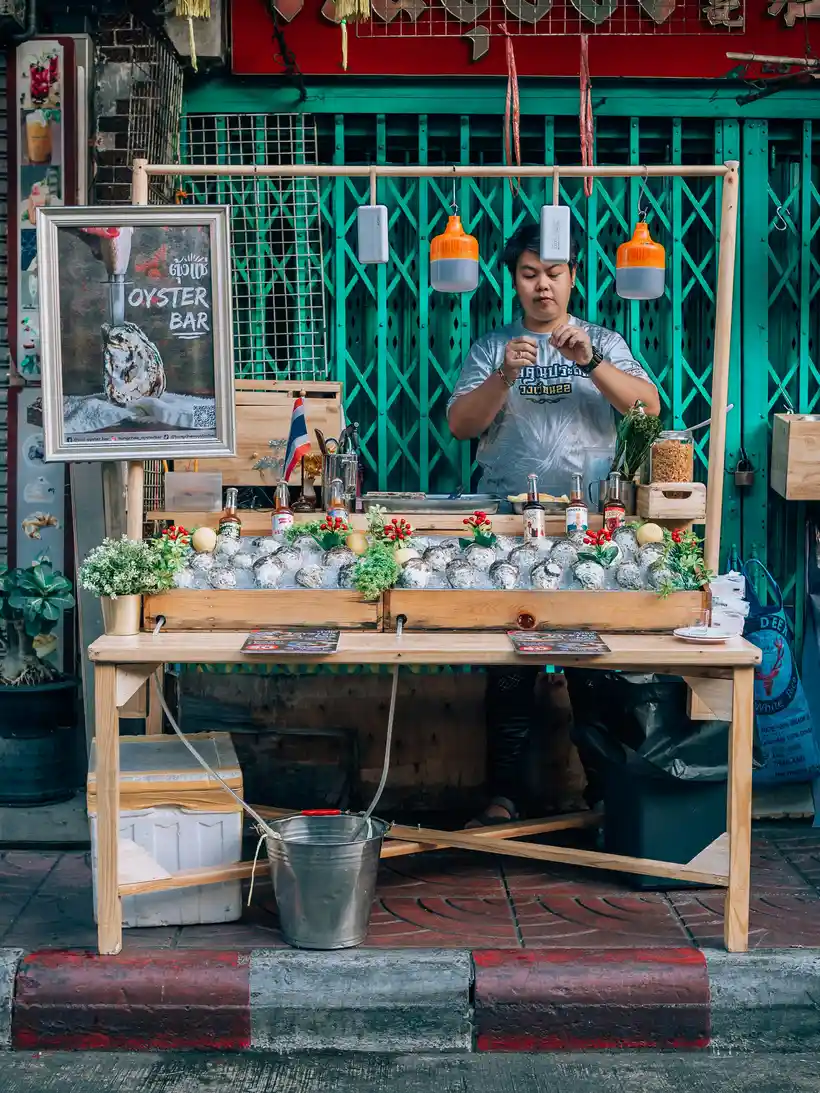
Grilled Oysters and Shellfish Stalls
Grilled shellfish stalls are common in Yaowarat and at evening markets across Bangkok. The vendor works over a charcoal grill, opening oysters on the half-shell and finishing them with garlic butter, oyster sauce, or spring onion. Cockles, green-lipped mussels, and sometimes whole crab are available at the same setup.
This format is more associated with night markets and Yaowarat than with lunch eating. It works best as part of a broader evening food walk rather than a standalone stop.
Classic Dishes Worth Knowing
Pad Thai (ผัดไทย)
Pad thai uses thin rice noodles stir-fried with eggs, firm tofu, dried shrimp, bean sprouts, and Chinese chives, finished with a tamarind-based sauce. Prawn or chicken can be added. Crushed peanuts, chili flakes, fish sauce, and sugar arrive on the side.
Quality varies widely. Tourist-area stalls tend to use too much sugar and skip the tamarind. Better versions use a well-seasoned wok, high heat, and a sauce with real acidity.
Mango Sticky Rice (ข้าวเหนียวมะม่วง)
Glutinous sticky rice cooked in coconut milk, served alongside ripe mango and drizzled with more sweetened coconut milk. Best when Nam Dok Mai mangoes are in season from March to May, though it is available year-round.
Boat Noodles (ก๋วยเตี๋ยวเรือ)
A thick, rich pork or beef noodle soup originally sold from canal boats in old Bangkok. The broth is dark from pork blood, soy sauce, and spices. Portions are traditionally small — two or three bowls is a normal lunch order.
Victory Monument has the most concentrated cluster of boat noodle stalls in central Bangkok. Order a few small bowls rather than one large one to compare the different broths on offer.
Ordering and Practical Notes
Most street stalls do not have English menus. Point at what someone else is eating, name the dish if you know it, or use a translation app to show the vendor what you want.
Pay in cash. QR payment is increasingly common at larger stalls and shophouse restaurants but inconsistent at smaller vendors. Carry 20 and 50 baht notes.
Prices at honest local stalls run from 50 to 150 baht for a full plate. Under 40 baht is very basic. Over 200 baht at a street stall usually means you are at a tourist market.
For a broader overview of eating options in Bangkok, see the eating in Bangkok guide.
Practical Tips for Bangkok Street Food Guide
Bring cash
Most street food vendors only accept cash. Carry Thai Baht in small denominations for quick, easy transactions.
Eat like a local
Watch how locals order and eat — it's the best way to discover dishes and customs. Vendors are usually happy to help.
Stay hydrated
Bangkok is hot and humid. Fresh coconut water and fruit shakes at street stalls are the local solution.
Restaurants in This Guide
One Michelin Star
1 Michelin Star
Jay Fai
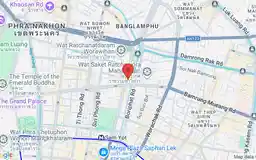
One-Michelin-star street food shophouse near Khao San Road — Supinya 'Jay Fai' Junsuta cooks solo over charcoal with distinctive ski goggles, and her crab omelet is one of Bangkok's most iconic dishes.
Google Rating
5,074 reviews
Bib Gourmand
Google Rating
424 reviews
Google Rating
331 reviews
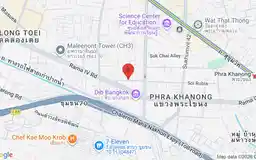
Google Rating
218 reviews
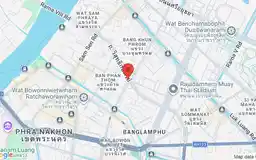
Google Rating
513 reviews
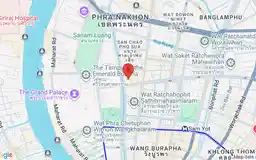
Google Rating
602 reviews
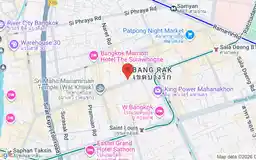
Google Rating
809 reviews
Google Rating
570 reviews
Google Rating
2,261 reviews
Google Rating
1,878 reviews
Google Rating
1,358 reviews
Google Rating
698 reviews
Google Rating
2,646 reviews
Google Rating
544 reviews
Google Rating
352 reviews
Google Rating
9,322 reviews
Google Rating
3,958 reviews
Google Rating
2,204 reviews
Google Rating
1,287 reviews
Google Rating
3,134 reviews
Google Rating
1,697 reviews
Google Rating
3,852 reviews
Google Rating
905 reviews
Google Rating
816 reviews
Google Rating
602 reviews
Google Rating
916 reviews
Google Rating
896 reviews
Google Rating
56 reviews
Google Rating
2,741 reviews
Google Rating
562 reviews
Google Rating
1,237 reviews
Google Rating
445 reviews
Google Rating
337 reviews
Google Rating
1,229 reviews
Google Rating
845 reviews
Google Rating
1,771 reviews
Google Rating
1,049 reviews
Google Rating
940 reviews
Other Restaurants
Fried Banana Rama 5 (Bang Kruai - Sai Noi Road)
Street Food restaurant in Bangkok, recommended in the Michelin Guide.
Google Rating
1,354 reviews
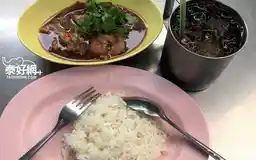
Charoen Saeng Silom
Street Food restaurant in Bangkok, recommended in the Michelin Guide.
Google Rating
4,610 reviews
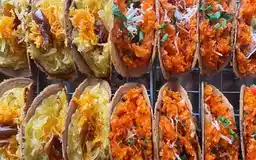
Mae Prapha Crispy Pancake (Phra Nakhon)
Street Food restaurant in Bangkok, recommended in the Michelin Guide.
Google Rating
224 reviews
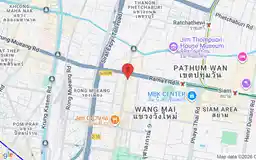
Tang Sui Heng (Banthat Thong Road)
Street Food restaurant in Bangkok, recommended in the Michelin Guide.
Google Rating
925 reviews
Related Areas for Bangkok Street Food Guide
Banglamphu is Bangkok's historic old-town neighbourhood around Khao San Road, with shophouses, guesthouses, cafés, temples, river access, and local street life.
Victory Monument is a major transport and commercial hub known for local food, shopping, hospitals, and dense urban energy.

Yaowarat is Bangkok's historic Chinatown area, useful for living, food, markets, temples, old shophouses, accommodation choices, and MRT access.
Related Stations for Bangkok Street Food Guide
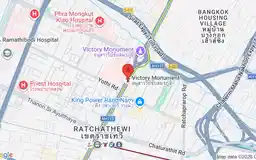
Victory Monument
อนุสาวรีย์ชัยสมรภูมิ
Monument circle, boat noodles, hospitals, and transport hub.
Google Rating
609 reviews
Related Attractions for Bangkok Street Food Guide
Khao San Road
Google Rating
5,448 reviews
Khao San Road is Bangkok's famous backpacker nightlife street in Banglamphu, known for cheap bars, hostels, street food, crowds, and tourist energy.