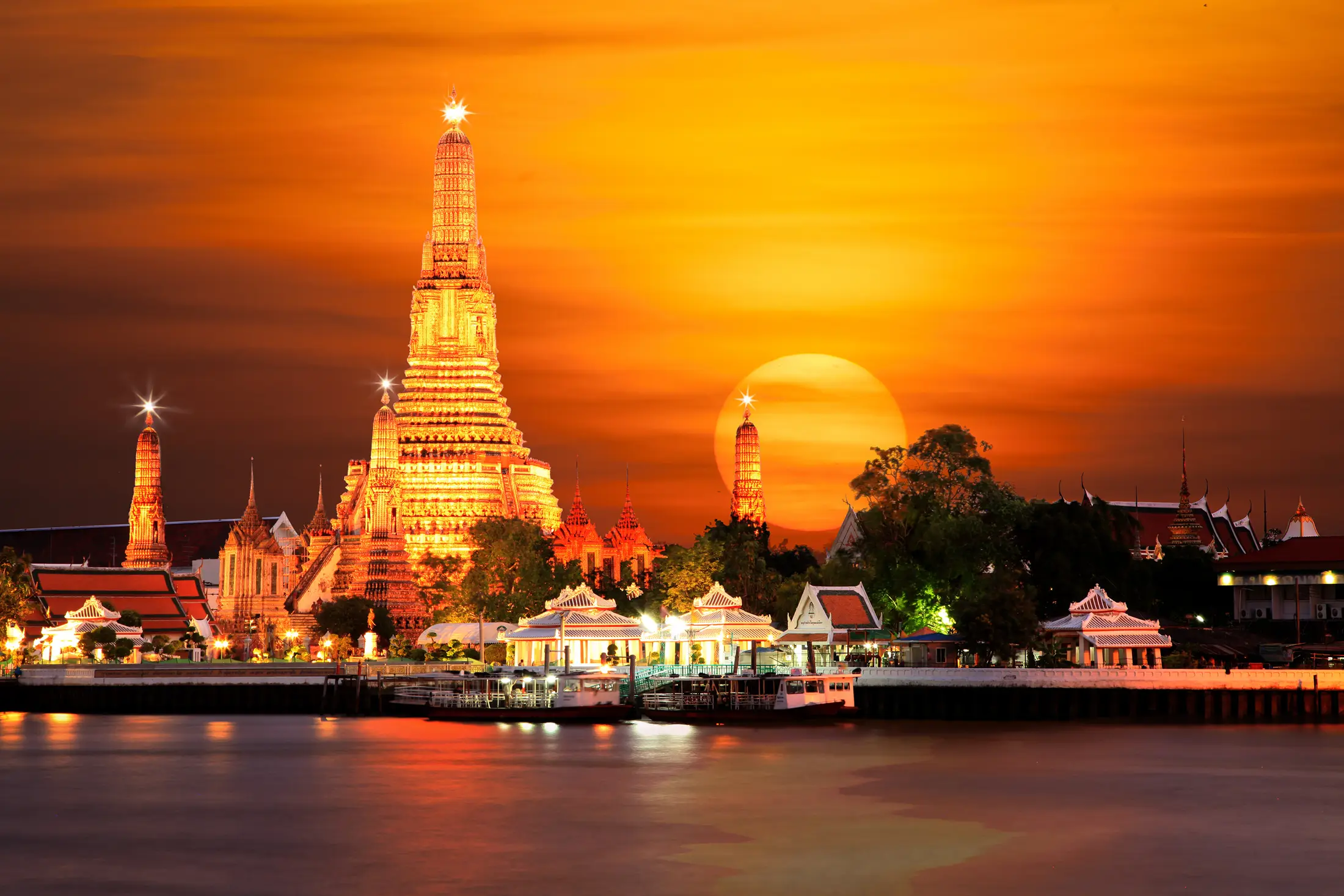
Good etiquette in Bangkok is less about memorising a theatrical list of rules and more about reading the room. Be patient, avoid making another person lose face in public, treat religious places as living places of worship, and follow the behaviour of the people hosting you.
Visitors are not expected to know every Thai custom. A calm manner, modest language, and willingness to correct a mistake matter more than performing culture perfectly.
The wai without anxiety
The wai—palms together with a slight bow—can greet, thank, apologise, or show respect. Its exact height and depth can reflect age and status, which is why visitors sometimes overthink it.
In ordinary visitor interactions, a smile, nod, and sawasdee are usually enough. Return a wai when it feels natural, particularly from a host or someone you are meeting socially. Staff in hotels and shops may wai as part of their service; you do not need to interrupt every transaction to perform a formal wai back.
Do not initiate a wai to a young child or someone whose hands are occupied. A polite verbal thank-you is more useful than forcing the gesture into an awkward moment.
The Thai government’s overview of customs visitors should know explains the wai as a greeting that can also communicate thanks or apology.
Polite language goes a long way
You can have a good Bangkok experience in English, but a few Thai words change the tone:
- sawasdee — hello;
- khop khun — thank you;
- khor thot — excuse me or sorry;
- mai pen rai — it is okay or no problem, depending on context;
- khun before a name — a polite, flexible form of address.
Thai polite particles vary with the speaker and context. You do not need perfect pronunciation before using a basic greeting. Listen, copy gently, and avoid turning someone’s language into a joke.
The Learning Thai in Bangkok guide covers schools, reading, pronunciation, tutors, and using Thai in daily life.
Avoid public humiliation
The phrase “saving face” can become a lazy stereotype, but the practical idea is useful: public confrontation often makes a simple problem harder to solve.
If a price, room, order, or journey is wrong, describe the problem quietly and ask for a solution. Do not shout across the room, insult the employee, or demand that one person admit fault in front of colleagues and customers. Calm does not mean accepting a scam; it means keeping enough control to solve the problem or leave.
Use the same approach when you make the mistake. A short apology and correction work better than a long defensive explanation.
Shoes, heads, and feet
Remove shoes before entering a home. At temples and some clinics, studios, guesthouses, and small businesses, follow signs, a shoe rack, or the host’s example. Do not walk barefoot into the street and then back into an indoor clean area.
Avoid touching another person’s head, including a child’s, unless the relationship clearly makes it appropriate. Do not use your feet to point at a person, move an object, hold a door, or indicate merchandise. When sitting on the floor in a temple, keep the soles of the feet from pointing toward Buddha images or monks.
These customs are not a reason to panic if your foot briefly points in the wrong direction on a crowded train. They are a reason to avoid deliberate or careless gestures in a home, temple, ceremony, or close social setting.
Visiting Bangkok temples
Temples are not merely decorative attractions. People may be praying, making merit, attending a funeral, studying, working, or seeking quiet while visitors move around them.
The Thai government’s temple etiquette guidance recommends modest dress, removing shoes before entering designated buildings, keeping phones quiet, respecting photography rules, and not pointing feet toward Buddha images or monks.
For a straightforward visit:
- Cover shoulders and knees and avoid transparent or extremely tight clothing.
- Remove shoes where instructed, but keep socks on if the site permits and that is more comfortable.
- Step over a raised threshold rather than standing on it.
- Keep conversations and phone audio quiet inside worship spaces.
- Check signs before photography and never interrupt a ceremony for a picture.
- Do not climb, lean on, or pose disrespectfully with Buddha images or historic structures.
- Sit to the side if unsure and watch how other respectful visitors position themselves.
Dress enforcement differs by site. The Grand Palace and Wat Phra Kaew may apply more specific rules than a small neighbourhood temple. Use the Bangkok Temples Guide to plan the major visits.
Monks and religious interactions
Give monks space on public transport and in temple areas. Physical-contact conventions matter particularly between women and monks; do not initiate contact. When handing something over, follow the monk’s or temple staff’s lead, as a cloth or intermediary may be used.
Do not photograph a monk closely without permission simply because the robes look visually interesting. A monk in transit or eating lunch is a person going through an ordinary day, not a permanent photo opportunity.
The monarchy, religion, and national symbols
The monarchy and Buddhist symbols are treated with seriousness, and Thai law can be much stricter than a visitor expects. Avoid jokes, provocative gestures, defacement, or social-media commentary about the monarchy. Do not put Buddha images in disrespectful positions or treat them as comic props.
You may hear the national anthem in public places and the royal anthem in some ceremonial or entertainment settings. Notice what people around you do and stand quietly when appropriate.
The Bangkok Safety Guide covers legal and political sensitivity and links to current official travel information. Do not rely on an old social-media post for a current legal rule.
Eating with other people
Thai meals are often shared, but not every meal follows the same pattern. Wait long enough to see whether dishes are communal. Use the serving spoon when one is provided rather than your personal spoon.
The spoon is the main eating utensil for many rice dishes, with the fork used to guide food onto it. Chopsticks are common for many noodle dishes and Chinese-Thai meals, not a universal Thai utensil for everything.
If someone orders for the table, mention allergies, vegetarian requirements, or foods you cannot eat before the order is placed. “Not spicy” is interpreted differently from kitchen to kitchen, so explain a medical restriction clearly rather than treating it as a preference.
Do not criticise unfamiliar food for entertainment. It is fine not to enjoy a dish; say it is not for you and move on. The Eating in Bangkok guide explains the difference between street stalls, shophouses, food courts, local restaurants, and planned dining.
Bargaining and prices
Bargaining is situational, not a national requirement.
It can be normal at some markets, with an unmetered tuk-tuk, or for certain services where no fixed price is displayed. It is inappropriate at convenience stores, malls, restaurants with menus, ticket offices, and most modern businesses.
Ask the price, make a reasonable counteroffer if the setting supports it, and accept a clear refusal. Do not turn a small difference into a performance about how little the amount means to you. The Money in Bangkok guide covers cash, cards, tipping, and payment screens.
Public behaviour and affection
Bangkok is modern and socially varied, but public spaces often reward restraint. Loud arguments, aggressive drunkenness, and conspicuous sexual behaviour draw more negative attention than ordinary affection between a couple.
Keep volume lower in trains, temples, clinics, building lobbies, and shared residential spaces. Use headphones rather than playing phone audio aloud. On escalators and platforms, do not block the flow while deciding where to go.
Invitations, homes, and gifts
If invited to a home, arrive close to the agreed time, remove shoes, and bring a small, uncomplicated gift when appropriate. Follow the host’s lead about seating and food. Do not wander into bedrooms or private spaces to photograph the view.
If food or drink is offered, accept what you comfortably can or decline politely. Dietary restrictions are easier when explained early and without implying that the household’s food is unsafe or inferior.
Festivals and ceremonies
Songkran, Loy Krathong, royal events, funerals, and religious days change how public space is used. A festival is not permission to ignore consent or safety. Do not throw water at monks, babies, people working, motorcyclists, or anyone protecting electronics or clearly opting out.
At a funeral or solemn ceremony, dress and speak conservatively and ask before photographing. The Bangkok Events and Festivals guide gives seasonal context; always check current event instructions.
The best etiquette rule
Pause for five seconds and look around. If shoes are lined up, remove yours. If people are quiet, lower your voice. If a ceremony is underway, give it space. If a price is fixed, do not bargain. If you are corrected, smile, apologise, and adjust.
Respect in Bangkok is usually communicated through small reductions in friction. You do not need to imitate being Thai; you need to behave like a considerate guest.
Bangkok Culture and Etiquette Frequently Asked Questions
Do visitors need to wai everyone in Bangkok?
No. A smile, nod, and polite greeting are enough in many everyday situations. Return a wai when appropriate, but do not worry about performing an elaborate greeting for every shop, hotel, or service interaction.
What should I wear to a Bangkok temple?
Use modest clothing that covers shoulders and knees and follow the rules at the specific site. Some major temples enforce a stricter dress code than a neighbourhood temple, so carry a light layer instead of assuming a wrap will be available.
When should shoes come off in Bangkok?
Remove shoes before entering a home and wherever a temple, clinic, studio, or small business indicates it. A shoe rack or row of shoes at the entrance is the practical signal.
Is bargaining expected everywhere?
No. Bargaining can be normal in some markets or for an unmetered service, but not in convenience stores, malls, restaurants with menus, or businesses showing fixed prices. Keep it friendly and accept a clear no.
Related Areas for Bangkok Culture and Etiquette
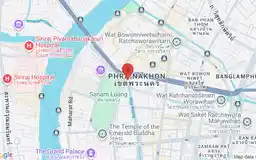
Banglamphu is Bangkok's historic old-town neighbourhood around Khao San Road, with shophouses, guesthouses, cafés, temples, river access, and local street life.
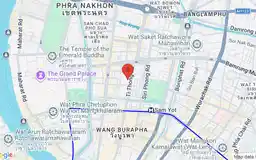
Rattanakosin is Bangkok's historic core, home to the Grand Palace, major temples, museums, and some of the city's most important landmarks.
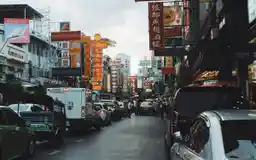
Yaowarat is Bangkok's historic Chinatown area, useful for living, food, markets, temples, old shophouses, accommodation choices, and MRT access.
Related Attractions for Bangkok Culture and Etiquette
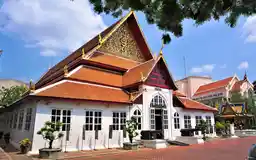
Bangkok National Museum
Google Rating
9,953 reviews
Southeast Asia's largest museum collection spanning Thai art, royal regalia, and artefacts from prehistory to the Rattanakosin era.
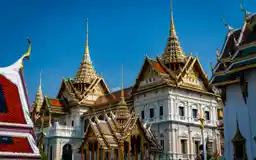
Grand Palace
Google Rating
80,541 reviews
Bangkok's most iconic royal complex featuring the sacred Emerald Buddha and stunning Thai architecture spanning over 200 years of history.
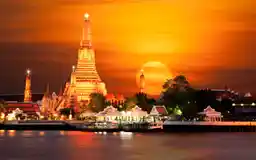
Wat Arun
Google Rating
110 reviews
The Temple of Dawn with its towering porcelain-encrusted spire is one of Bangkok's most photogenic landmarks on the Thonburi riverside.
Wat Pho
Google Rating
38,307 reviews
Home to the massive 46-metre Reclining Buddha and Thailand's oldest traditional massage school, just south of the Grand Palace.