Bangkok is neither fully cashless nor difficult to pay in. The useful approach is redundancy: carry some Thai baht, keep a card that works internationally, know the cost of withdrawing more, and do not assume a QR code will accept a foreign banking app.
The currency is the Thai baht, written as THB or ฿. The Bank of Thailand issues Thai banknotes. Exchange rates, bank charges, ATM fees, and card terms change, so compare the total cost shown at the moment of the transaction.
The practical payment mix
For a normal visitor, I would use three layers:
- Cash for small and uncertain situations — street food, markets, small shops, some taxis, tips, and places where the card terminal is unavailable.
- A primary card — hotels, malls, larger restaurants, hospital deposits, and planned purchases.
- A backup card or reserve — stored separately so one lost wallet does not stop the trip.
In everyday Bangkok, cash remains useful even as cards and cross-border QR payments expand. The city has sophisticated digital payments, but access depends on the merchant and on whether your own bank participates.
Cash in Bangkok
Large notes are convenient to carry but awkward for a small purchase first thing in the morning. Break a large note at a supermarket, convenience store, mall, or other business making a normal sale rather than expecting a small stall to empty its change.
Keep enough small notes for food, taxis, market purchases, and the last part of a journey. Do not carry the entire trip budget in one place. At a crowded market or event, separate spending cash from the reserve.
Damaged notes can be refused in ordinary transactions. The Bank of Thailand says damaged banknotes can be taken to commercial banks or designated banks for assessment; do not try to pass on a note you know may be invalid.
Using cards
Cards are common in hotels, malls, department stores, international chains, many restaurants, hospitals, and larger attractions. Small merchants may set a minimum, add a clearly disclosed processing condition, or accept only cash or Thai QR.
Before travel, check:
- whether the issuer blocks foreign transactions by default;
- the foreign-transaction fee;
- how the issuer handles ATM withdrawals;
- whether app approval or SMS codes will work abroad;
- the emergency number for a lost card;
- whether a deposit reduces the card’s available balance.
Keep the card in sight during payment when possible. Enable transaction notifications, but do not make a phone notification your only record—hotel deposits can remain pending after checkout.
Always read the currency screen
A card terminal or ATM may offer to convert the transaction into your home currency. This is called dynamic currency conversion. The screen should show the baht amount, converted amount, rate, and any markup.
Visa’s explanation of dynamic currency conversion says the customer must be given a choice. Paying or withdrawing in Thai baht normally means your card provider performs the conversion; accepting the home-currency offer means the merchant or ATM conversion applies. Compare the costs rather than choosing the familiar-looking currency automatically.
If a terminal selects your home currency without a clear choice, ask for the transaction to be cancelled and repeated in baht.
ATM withdrawals
ATMs are widespread, but one withdrawal can involve several separate costs:
- the Thai ATM operator’s disclosed fee;
- your bank’s cash-withdrawal fee;
- your bank’s foreign-exchange markup;
- interest when using a credit card as a cash advance;
- dynamic currency conversion if you accept it.
The ATM should show the operator fee before completion. Your own bank’s costs may not appear on that screen. A larger, less frequent withdrawal can reduce repeated flat fees, but do not withdraw more cash than you can secure.
Use an ATM at or inside a bank when convenient, especially for a large withdrawal. Check the slot and keypad, shield the PIN, take the card before walking away, and keep the receipt until the transaction appears correctly. If the machine keeps the card or cash does not match the account debit, photograph the machine identification and contact the operator and your bank promptly.
Exchanging foreign cash
Use a commercial bank or licensed money changer. The Bank of Thailand’s exchange-control summary says foreign-currency exchange should be conducted through authorised banks, money changers, or transfer agents.
Compare the rate for the exact currency and note denomination you hold. “No commission” does not automatically mean the best total return. Airport exchange is convenient for arrival cash, while a later city exchange may offer a different rate; the difference only matters if it outweighs the time and transport needed to chase it.
Bring clean, current notes. A counter may reject damaged, marked, or older foreign banknotes. Count the baht before leaving and keep the receipt when it could be needed for a later exchange or record.
QR payments and PromptPay
Thai residents routinely pay by scanning PromptPay QR codes through Thai banking apps. A visible QR code does not mean every foreign visitor can use it.
The Bank of Thailand’s cross-border payment information lists specific participating countries, banks, and networks. Check your own bank before the trip and test with a small purchase. Do not rely on QR as the only way to pay for a taxi, market meal, or late-night purchase.
Before confirming a QR transfer, read the recipient name and amount. A code placed over another code or a recipient name unrelated to the business is a reason to stop.
Tipping without making it awkward
Bangkok does not use one compulsory tipping percentage for every service. Context matters.
- Restaurants: Check the bill for service charge before adding more. A modest extra amount for attentive service is welcome but not automatic.
- Street food and food courts: Pay the stated price. A tip is not expected as a condition of service.
- Taxis: Pay the metered or agreed fare and tolls. Rounding up is common when the service is straightforward, but it does not excuse a driver from using the agreed pricing method.
- Hotel staff, massage therapists, guides, and drivers: Tip when personal service warrants it and the business permits it. Choose an amount that reflects the service rather than a rule imported from another country.
Give a tip directly and discreetly. Do not use a large note if you expect change from the tip itself.
Deposits, holds, and hidden costs
The price on a booking page may not be the full amount that temporarily leaves your available balance. Ask about:
- hotel security deposits and when they are released;
- service charge and tax;
- breakfast, extra beds, and late checkout;
- apartment utility rates and end-of-lease cleaning;
- tolls and airport surcharges on road transfers;
- luggage, seat, or payment fees on transport bookings;
- minimum spends and deposits at nightlife venues.
For a hotel or apartment, distinguish a refundable card hold from a completed charge. Keep the checkout or deposit-release record until the hold disappears.
Budget by decisions, not one daily number
A universal “Bangkok costs X per day” figure hides the choices that matter. Build a budget in layers:
| Layer | What to estimate |
|---|---|
| Fixed | accommodation, insurance, school or visa-related costs, subscriptions |
| Daily basics | local transport, ordinary meals, water, laundry, mobile data |
| Choice-driven | alcohol, imported food, fine dining, taxis in traffic, shopping |
| Irregular | medical care, deposits, replacement travel, repairs, family visits |
The Budget Travel in Bangkok guide is for short trips. The Cost of Living in Bangkok guide is for residents and long stays. Neither should be treated as a promise that another person’s lifestyle will cost the same.
When paying for shopping and food
Markets often reward simple cash transactions. Bargain only where bargaining is part of the setting, keep it friendly, and do not argue aggressively over a small amount after the seller has clearly declined.
At restaurants, check whether prices include service and tax, especially for hotels, rooftops, fine dining, and packages. At a food court, you may need to load value onto a temporary card and reclaim the unused balance before leaving.
Use the Shopping in Bangkok guide to compare malls, markets, and wholesale areas, and the Eating in Bangkok guide to understand street food, local restaurants, food courts, and planned dining.
A first-day money setup
- Obtain a practical amount of baht without carrying the whole budget.
- Break one large note through a normal purchase.
- Test the primary card and check the transaction notification.
- Store the backup card separately.
- Learn how your bank describes foreign and cash-withdrawal fees.
- Decline any payment screen you do not understand and start again.
Money in Bangkok becomes easy when no single wallet, app, card, ATM, or QR code is allowed to be the only plan.
Money in Bangkok Frequently Asked Questions
Do I need cash in Bangkok?
Yes. Cards work in many hotels, malls, and established restaurants, but cash remains useful for markets, small food shops, taxis, and businesses that do not support your payment method. Carry a practical mix rather than relying on only one option.
Should I choose baht or my home currency on a card terminal?
A terminal or ATM may offer dynamic currency conversion into your home currency. Compare the displayed rate and fees; choosing Thai baht normally leaves conversion to your own card provider instead of accepting the operator's conversion offer.
Can tourists use Thai QR payments?
Do not assume so. Thai residents commonly use PromptPay QR, while cross-border QR access depends on participating banks and countries. Check your own banking app before relying on QR for a purchase.
Is tipping required in Bangkok?
Tipping is not a universal fixed rule. Check whether service charge is already included, round up or leave a modest amount when appropriate, and tip for good personal service without importing a compulsory percentage into every transaction.
Related Areas for Money in Bangkok
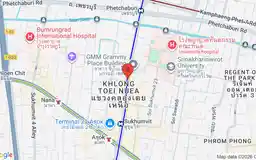
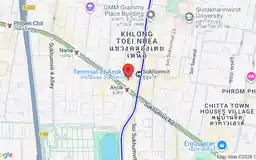
Asok is one of Bangkok's busiest central hubs, combining offices, condos, shopping, and excellent BTS and MRT connections.
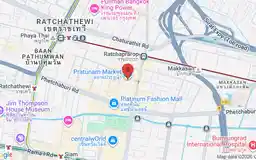
Pratunam is a central Bangkok area useful for budget hotels, wholesale fashion streets, canal access, and quick links to Siam and Ratchaprasong.
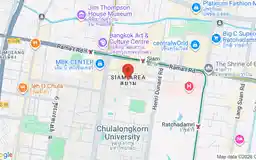
Siam is Bangkok's shopping heart, home to major malls, entertainment venues, and some of the city's busiest pedestrian areas.
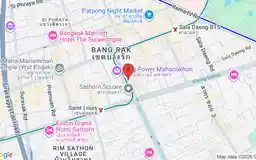
Silom is one of Bangkok's best-known business and nightlife areas, popular for offices, restaurants, bars, and urban convenience.
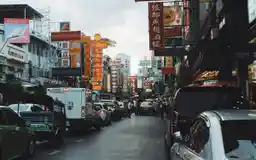
Yaowarat is Bangkok's historic Chinatown area, useful for living, food, markets, temples, old shophouses, accommodation choices, and MRT access.
Related Shopping for Money in Bangkok
7-Eleven Thailand
Google Rating
22 reviews
Thailand's ubiquitous convenience store chain with over 14,000 locations nationwide, open 24/7 with surprisingly good ready-made food and essential services.
CentralWorld
Google Rating
79,038 reviews
One of Southeast Asia's largest shopping malls with hundreds of stores, a massive events plaza, and great dining options.

MBK Center
Google Rating
65,158 reviews
Bangkok's legendary bargain mall packed with electronics, mobile phones, souvenirs, and affordable clothing across seven floors.
Terminal 21
Google Rating
21,430 reviews
A unique airport-themed mall where each floor represents a different city, with one of Bangkok's best food courts on the top level.