Getting around Bangkok looks complicated at first.
There is the BTS, MRT, Airport Rail Link, boats, buses, Grab, motorcycle taxis, private cars and a road network that occasionally feels like it was designed as a practical joke.
But I don't actually think Bangkok is difficult to get around. The mistake is trying to find one type of transport that works for everything.
I normally use the BTS or MRT for the long part of a journey, then walk, take a motorcycle taxi or book a Grab for the final part. Around the river, I might take a boat instead.
And whenever I have the time, I walk.
Because transport gets you around Bangkok. Walking is how you really get to know it.
Ways to Get Around

Recommended
BTS Skytrain
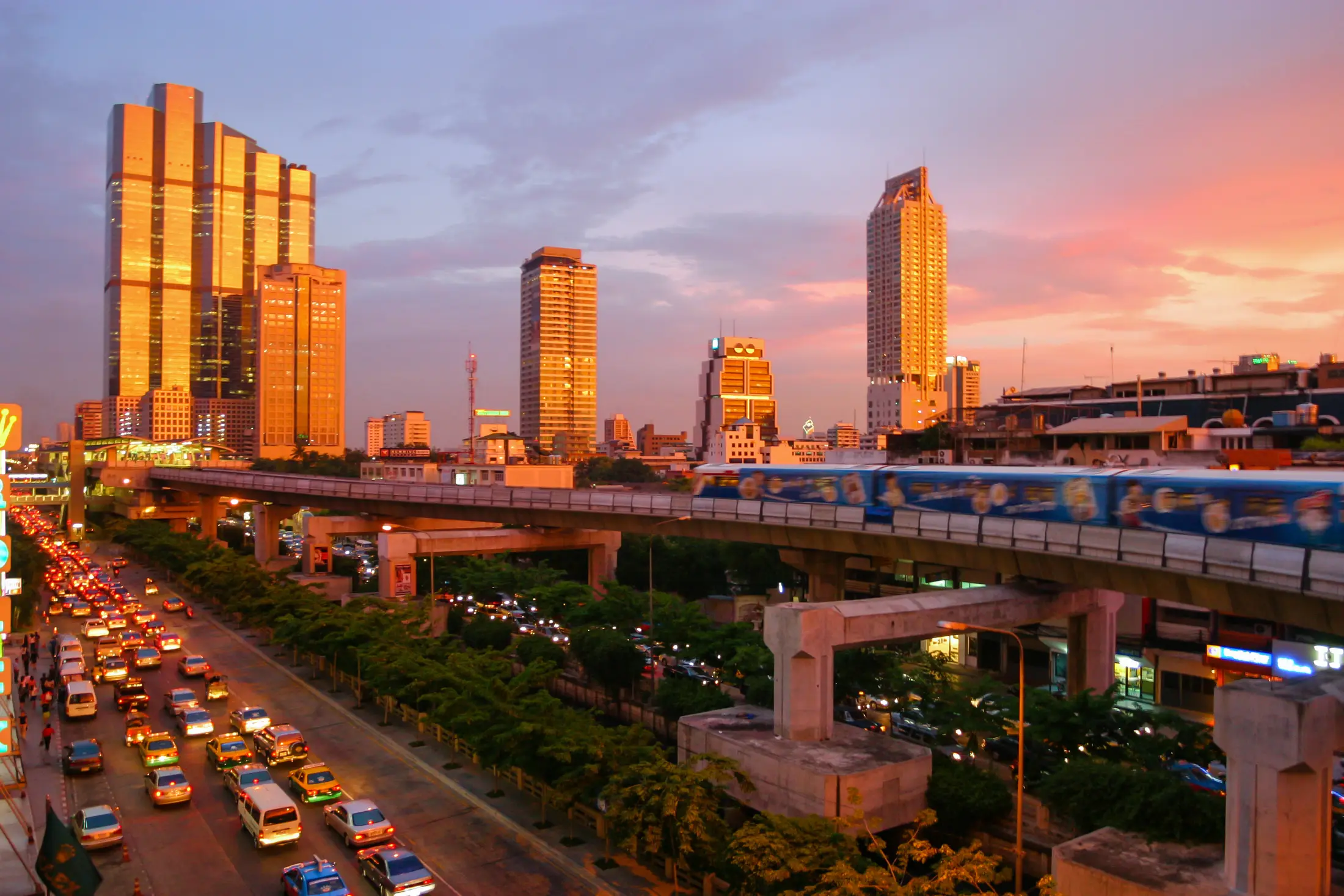
This is usually where I tell people to start. The BTS runs above Bangkok's traffic and covers many of the areas you're most likely to visit, stay in or consider living around. If both ends of my journey are reasonably close to BTS stations, I rarely even consider travelling by road during busy hours. Just check the station exit before you arrive. Taking the wrong one at a major Bangkok junction can turn a very small mistake into another ten minutes of stairs, bridges and trying to work out how to get to the other side of the road.

MRT
The MRT is just as important as the BTS, even if visitors often learn the BTS first. The Blue Line is particularly useful for places such as Chinatown, Chatuchak, Rama 9, Silom and Sukhumvit, while the Purple, Yellow and Pink lines extend the network much further out. I tend to think of BTS and MRT together when planning a journey, but they are not one single system, so don't assume one card magically works everywhere. Fortunately, you don't need to understand the entire network. You only need to understand the journey you're making today.

Airport Rail Link
If I'm travelling between Suvarnabhumi Airport and central Bangkok with manageable luggage, the Airport Rail Link is often my first choice. It avoids road traffic and connects with the MRT at Makkasan/Phetchaburi and BTS at Phaya Thai. For one person with one suitcase, it can be brilliant. For a family with several large bags staying nowhere near a station, booking a Grab suddenly becomes much more attractive. The technically cheapest journey isn't always the journey I would actually choose after a long flight.

Grab
If I need to travel by car in Bangkok, Grab is usually my first choice. I like knowing where I'm going, where the driver is picking me up and roughly what the journey will cost before I get in. What Grab cannot do, unfortunately, is remove Bangkok traffic. If Sukhumvit Road isn't moving, neither is your Grab. Also check the pickup point carefully. Being 30 metres away on the opposite side of a divided Bangkok road can mean your driver is technically very close and practically nowhere near you.

Metered Taxis
Bangkok's colourful taxis are everywhere and they can still be useful, but personally I normally choose Grab first. If a metered taxi is already sitting outside my hotel or restaurant and I'm making a straightforward journey, I might take it. Otherwise I prefer booking through an app. If you do use a street taxi, make sure the meter is used. A taxi can be very cheap while taking an astonishingly long time, which gives you plenty of opportunity to become familiar with every shop and lamppost along the route.

Private Car
Driving your own car in Bangkok gives you freedom, but it also gives you Bangkok traffic, parking and the occasional moment where six lanes of vehicles appear to have collectively decided that road markings are more of a suggestion. If you live here long-term, especially outside the centre, a car can make a lot of sense for shopping, family life and trips outside Bangkok. In central Bangkok I rarely think of it as the easiest option. If BTS or MRT takes me where I'm going, I would normally leave the car behind.

River & Canal Boats
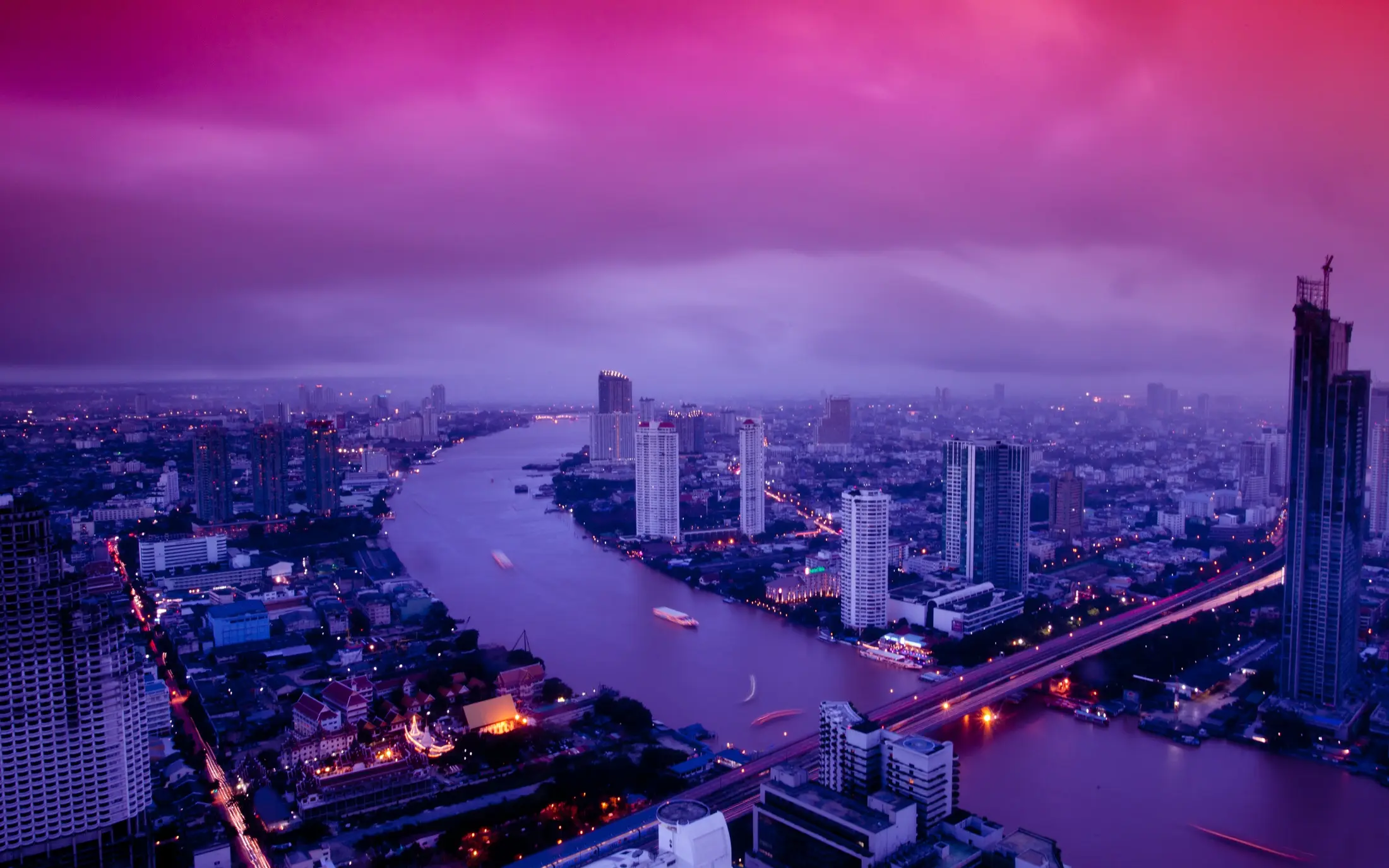
Bangkok doesn't only move along roads. The Chao Phraya River and the city's canals are genuine parts of the transport network, and I think they're some of the most enjoyable ways to travel around Bangkok. Boats are particularly useful around the riverside and old Bangkok, while canal services can cut across parts of the city while the cars beside you are busy doing what Bangkok traffic occasionally does best: not moving. Just remember there isn't one universal service called "the Bangkok boat", so check the pier, route and direction before you go.
City Buses
Bangkok's bus network is huge. It is also something I would describe as Bangkok transport on intermediate difficulty. Buses are cheap and reach places the rail network doesn't, which makes them genuinely useful once you understand the city better. For a first-time visitor trying to reach an unfamiliar address, though, I would usually choose BTS, MRT or Grab first. Buses become much more interesting when you start living here, commuting regularly or exploring areas away from the main visitor routes.
Motorcycle Taxis
Motorcycle taxis solve what I think of as the Bangkok last-kilometre problem. Your condo, restaurant or office might look very close to the BTS on a map, then you arrive and discover it is another kilometre down a soi in 34°C heat. That's where they make perfect sense. I wouldn't choose one for a long journey, with luggage or in heavy rain, but for the final stretch between a station and somewhere deep inside a soi they can be incredibly useful.
Walking Is How You Really Get to Know Bangkok
I think walking deserves much more attention than it normally gets in Bangkok guides.
It isn't always comfortable, and it definitely takes some getting used to.
The heat can be brutal, especially in the middle of the day. Pavements can be uneven, disappear completely or suddenly become parking spaces. And every now and then you walk past an open drain and Bangkok reminds you very clearly that not every smell in the city comes from jasmine and street food.
But then ten metres later you smell chicken grilling over charcoal, garlic hitting a wok, fresh mango being cut or something you have absolutely no idea what is but suddenly need to try.
That is Bangkok.
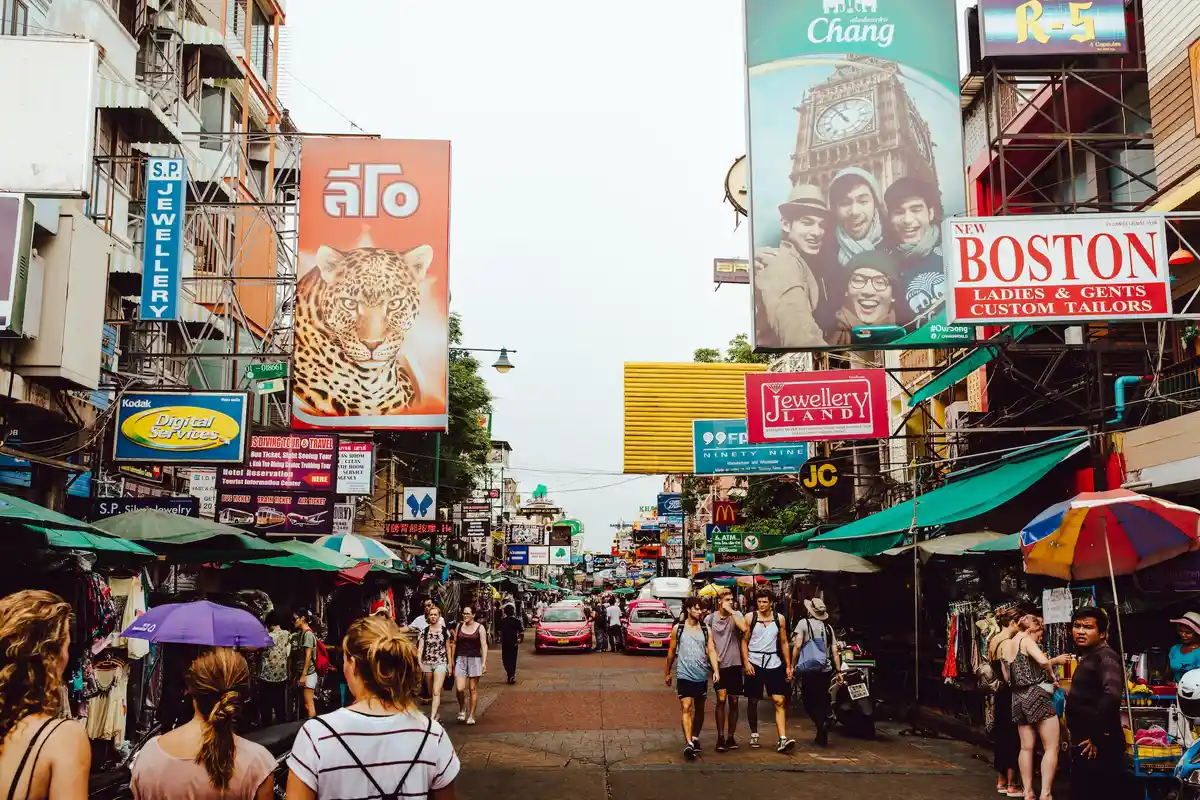
If you only move between air-conditioned trains, malls, hotels and Grab cars, you can see a lot of Bangkok without really getting close to it.
Walking is when I notice the things that make Bangkok feel alive. The food cart somebody has been running on the same corner for years, the mechanic working halfway out onto the pavement, schoolchildren buying snacks, office workers eating lunch on plastic stools and old wooden houses somehow surviving between new condos.
You hear Bangkok differently when you walk as well. Motorcycles, vendors, conversations, music, construction, temple bells and the constant background noise of a city where something always seems to be happening.
And you meet people.
Not necessarily in some grand travel-documentary way. Sometimes it is just somebody smiling at you, pointing you in the right direction or trying to explain what you're about to eat. Sometimes it is simply watching everyday Bangkok life happening around you.
That is still how you slowly start understanding a place, its people, its food and its culture.
I don't really agree when people say Bangkok is a bad walking city. It can certainly be a difficult walking city. There is a difference.
Yaowarat, Talat Noi, Banglamphu, Charoen Krung, Ari, Silom and many of the smaller sois are brilliant on foot. Other parts of Bangkok seem determined to remind you that pedestrians were not invited to the planning meeting.
And then there is the heat.
Seven hundred metres at eight in the morning can be a pleasant little walk. The same seven hundred metres at two in the afternoon can feel like a personal disagreement with the sun.
You get used to it. I walk a little slower, look for shade, stop for something cold and accept that sometimes I'm going to arrive sweaty.
That's Bangkok too.
For me, the train gets me to the neighbourhood.
Walking is where I actually discover it.