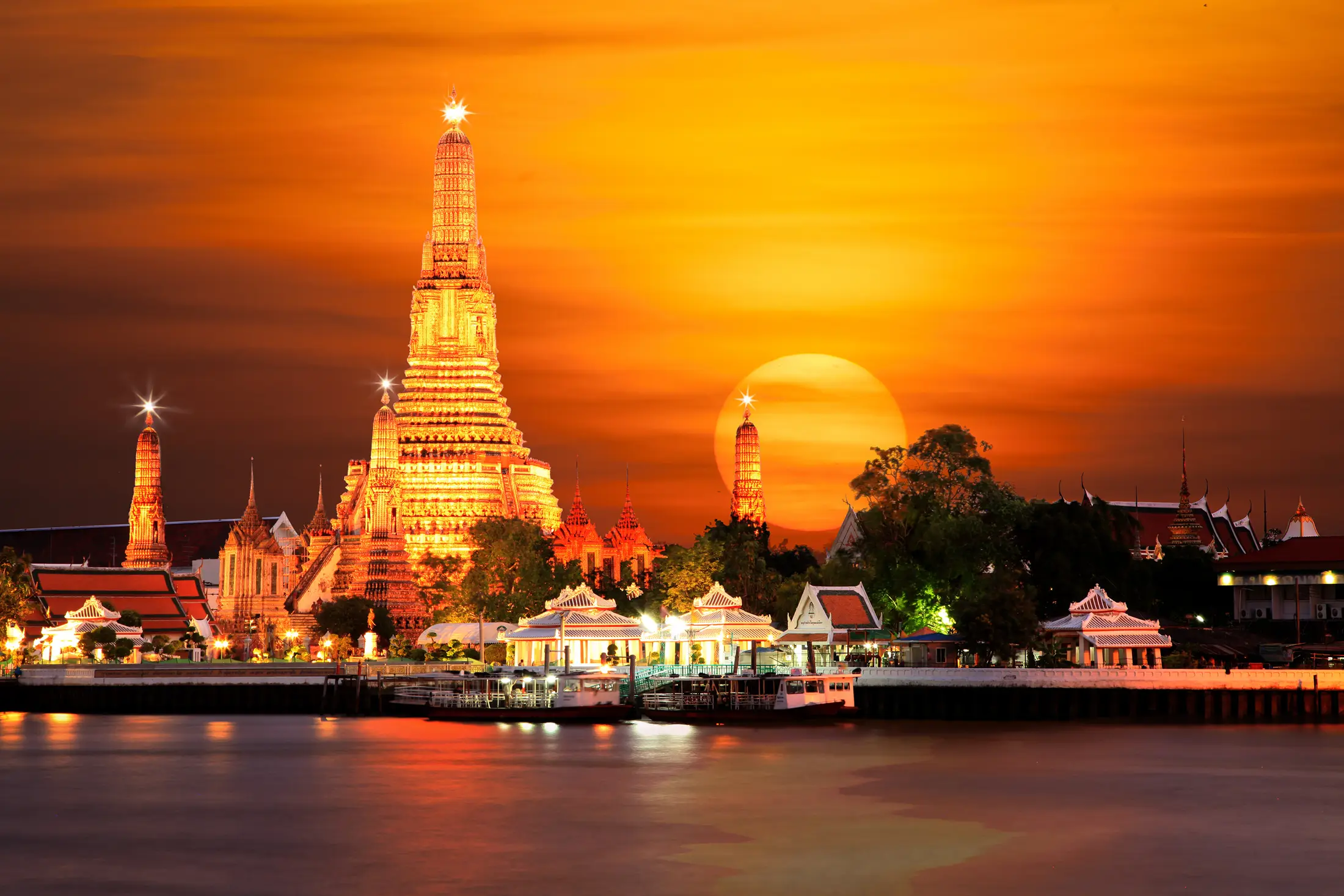
For a first Bangkok temple day, focus on old Bangkok: Grand Palace, Wat Pho, Wat Arun, and one smaller stop if you still have energy.
Do not turn temple visits into a checklist. Heat, dress rules, crowds, and transport make a focused route better than trying to see every famous name in one day.
Dress and behaviour
Dress modestly for temple visits. Shoulders and knees should be covered, and shoes usually come off before entering important halls.
Keep your voice low, avoid blocking worshippers, and do not treat Buddha images as photo props. If a rule is posted at the entrance, follow the local sign rather than an old blog post.
Old-town route
The classic route is Grand Palace and Wat Phra Kaew, Wat Pho, and Wat Arun across the river. This works because the sights are close enough to make a logical route.
Start early if you can. The old city gets hot, and the biggest sights can feel crowded later in the day.
Wat Pho
Wat Pho is one of the most rewarding temple stops because it combines the Reclining Buddha, courtyards, chedis, massage history, and a location close to the river.
It is a useful anchor for a first temple route because it sits between the Grand Palace area and the river crossing to Wat Arun.
Wat Arun
Wat Arun is best treated as a river stop. The temple is visually strongest from across the water, but visiting the grounds adds texture to the route.
Use the river rather than forcing every movement by road.
Other temple stops
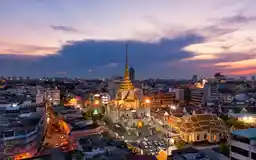
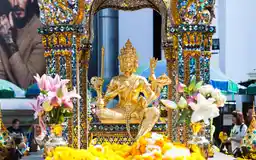
Wat Saket gives a different old-town view from the Golden Mount. Wat Traimit pairs naturally with Chinatown and Yaowarat Road. Erawan Shrine is not a temple in the same route sense, but it is a central religious landmark near Ratchaprasong.
My Bangkok advice
Plan temples around heat and respect, not only photos. Wear the right clothes from the start, carry water, move by river where possible, and leave space in the day for a slow meal or shaded break.
Related Areas for Bangkok Temples Guide
Rattanakosin is Bangkok's historic core, home to the Grand Palace, major temples, museums, and some of the city's most important landmarks.

Yaowarat is Bangkok's historic Chinatown area, useful for living, food, markets, temples, old shophouses, accommodation choices, and MRT access.
Charoen Nakhon is a Chao Phraya riverside area in Khlong San known for ICONSIAM, river views, and fast connections into central Bangkok.
Related Attractions for Bangkok Temples Guide
Grand Palace
Google Rating
79,831 reviews
Bangkok's most iconic royal complex featuring the sacred Emerald Buddha and stunning Thai architecture spanning over 200 years of history.

Wat Pho
Google Rating
38,057 reviews
Home to the massive 46-metre Reclining Buddha and Thailand's oldest traditional massage school, just south of the Grand Palace.
Wat Arun
Google Rating
108 reviews
The Temple of Dawn with its towering porcelain-encrusted spire is one of Bangkok's most photogenic landmarks on the Thonburi riverside.
Wat Saket
Google Rating
8,083 reviews
Climb 344 steps to the Golden Mount for sweeping 360-degree views over Bangkok's old town, temples, and rooftops from an artificial hill.
Wat Traimit
Google Rating
22,429 reviews
Home to the world's largest solid gold Buddha image, a 5.5-tonne statue accidentally discovered under a plaster exterior in the 1950s.
Erawan Shrine
Google Rating
648 reviews
One of Bangkok's most visited Hindu shrines, sitting at the busy Ratchaprasong intersection and surrounded by luxury malls and constant devotion.