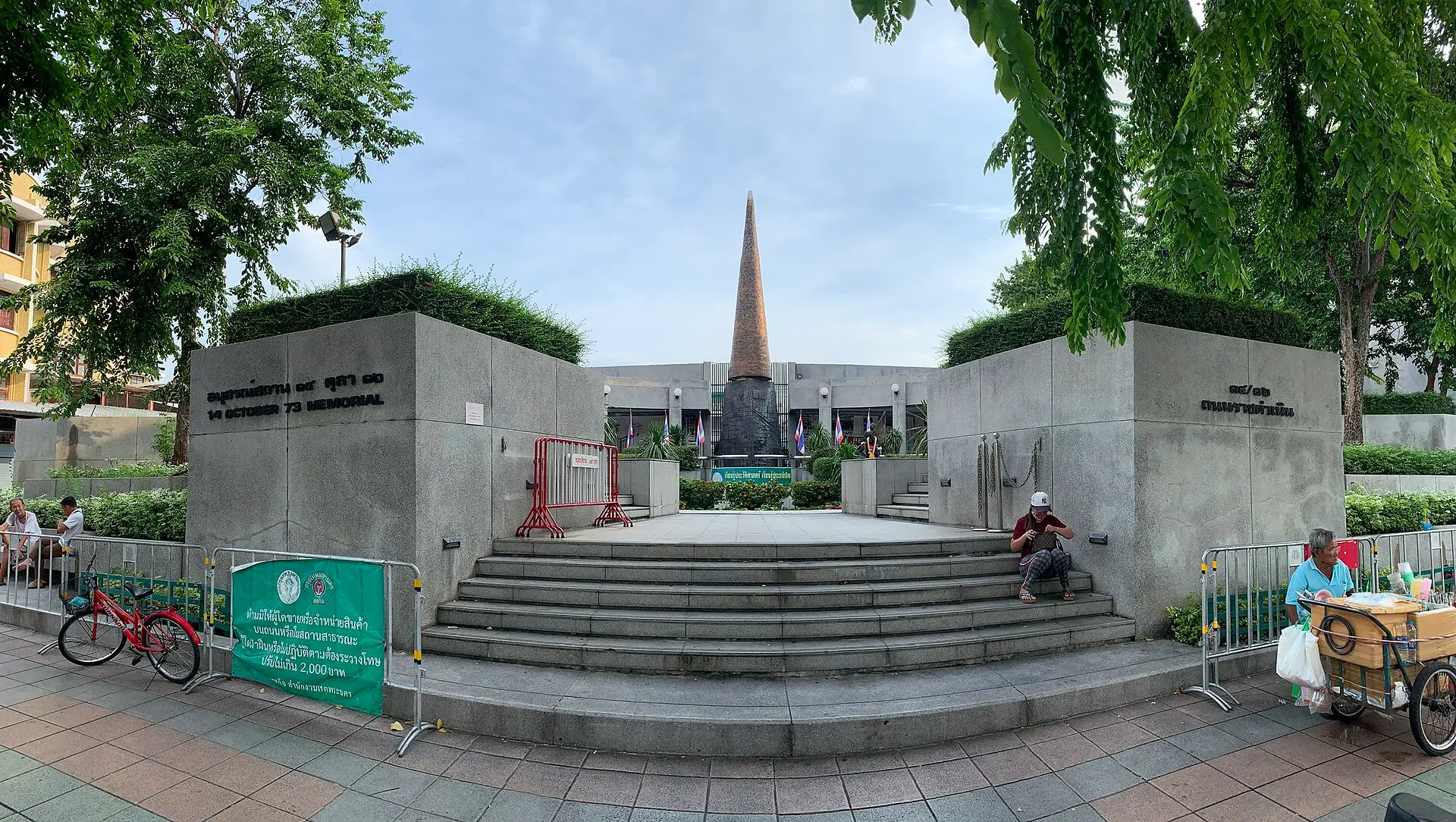
Democracy Monument and nearby Ratchadamnoen Avenue are central to Bangkok’s political geography. They connect the memory of the 1932 revolution with later protests, state ceremony, student movements, public mourning, rallies, and contested civic space.
This is one of the more sensitive parts of Bangkok history, but it is important because Bangkok’s streets are not only transport routes. Some are political stages.
Why place matters
Political history often becomes visible through location. In Bangkok, old-town roads, monuments, university areas, Sanam Luang, government buildings, and later commercial districts have all served as gathering points.
Ratchadamnoen Avenue is especially symbolic because it links royal, state, and civic space. Democracy Monument sits within that landscape rather than apart from it.
14 October 1973 student uprising
The 14 October 1973 uprising was a major student-led democracy movement in Bangkok. Thammasat University students and wider civic groups helped organize large demonstrations calling for constitutional rule and an end to military government.
The protests centered on Bangkok’s old civic spaces, especially around Ratchadamnoen Avenue. The military government fell, and Thailand entered a short democratic period. The event remains important because it showed how students, universities, streets, monuments, and public assembly could change national politics from the capital.
6 October 1976 Thammasat University massacre
The democratic opening after 1973 did not last. Political tensions rose through the mid-1970s, and on 6 October 1976 students and protesters at Thammasat University were attacked. A military coup followed later the same day.
The massacre is remembered as one of the darkest chapters in Thailand’s modern history. It still matters in Bangkok because the places involved - Thammasat, Sanam Luang, Ratchadamnoen, and nearby old-town civic space - remain part of the city’s political memory.
Protest geography
Bangkok has seen repeated waves of political demonstration, conflict, mourning, and public assembly. Different moments belong to different places, but the pattern is clear: the capital’s public spaces carry political meaning.
For visitors, the practical lesson is to treat major rally areas with awareness. Avoid crowds during active protests, follow current local news, and do not reduce complex events to photo opportunities.
How to read it calmly
Start with Bangkok and the 1932 revolution to understand why constitutional symbols matter. Then see Democracy Monument as part of a wider civic landscape, not just a roundabout.
The page is about spatial context, not a full political history of Thailand.
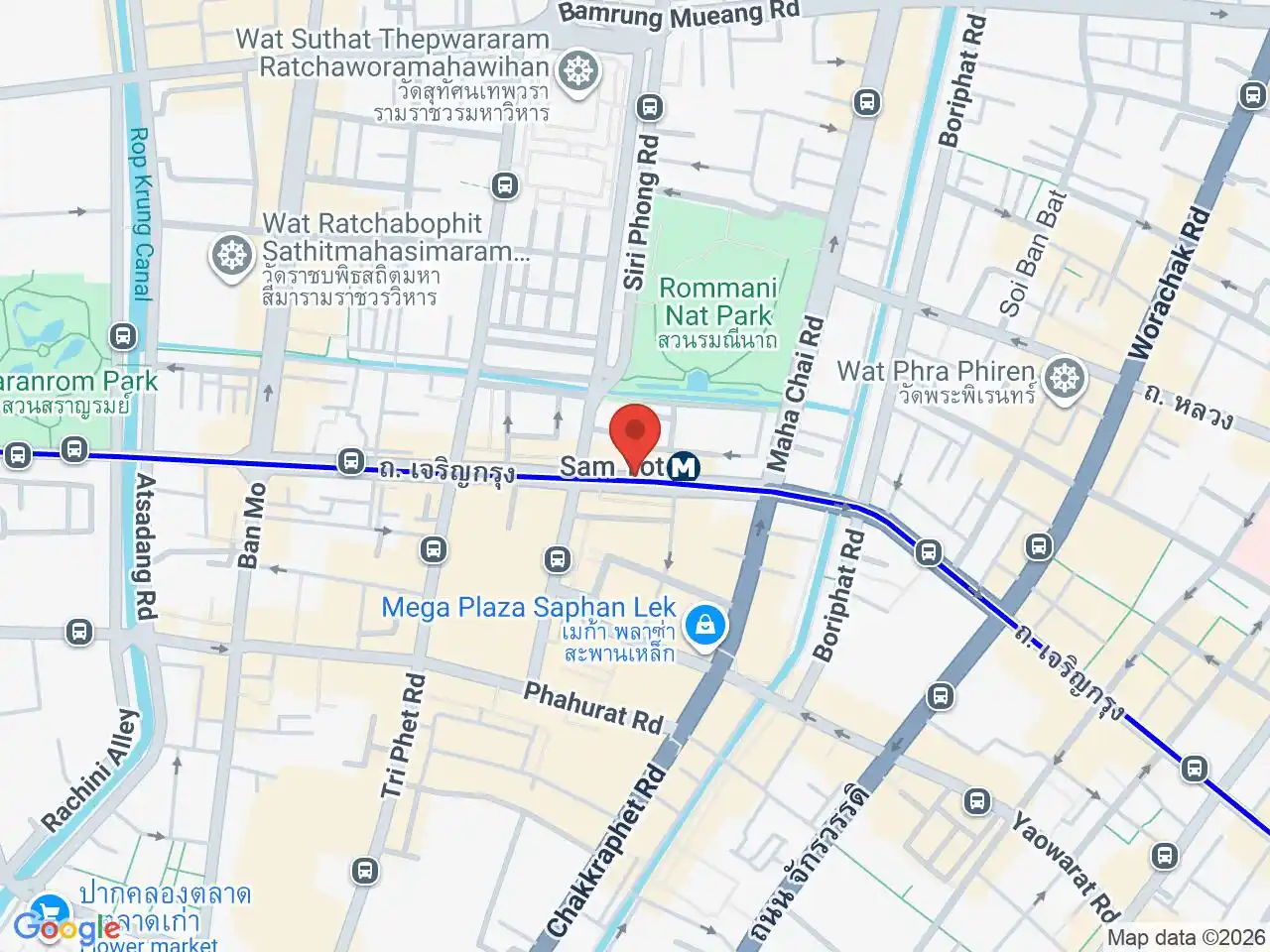
Related Areas for Democracy Monument and Bangkok Protest History
Related Stations for Democracy Monument and Bangkok Protest History
Google Rating
31 reviews
Related Attractions for Democracy Monument and Bangkok Protest History
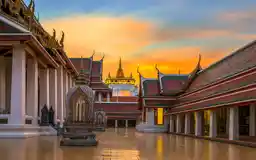
Wat Saket
Google Rating
8,083 reviews
Climb 344 steps to the Golden Mount for sweeping 360-degree views over Bangkok's old town, temples, and rooftops from an artificial hill.