Bangkok Chinatown at a glance
- Type
- landmark
- Entry
- Free
- Area
- Yaowarat
- Nearest stations
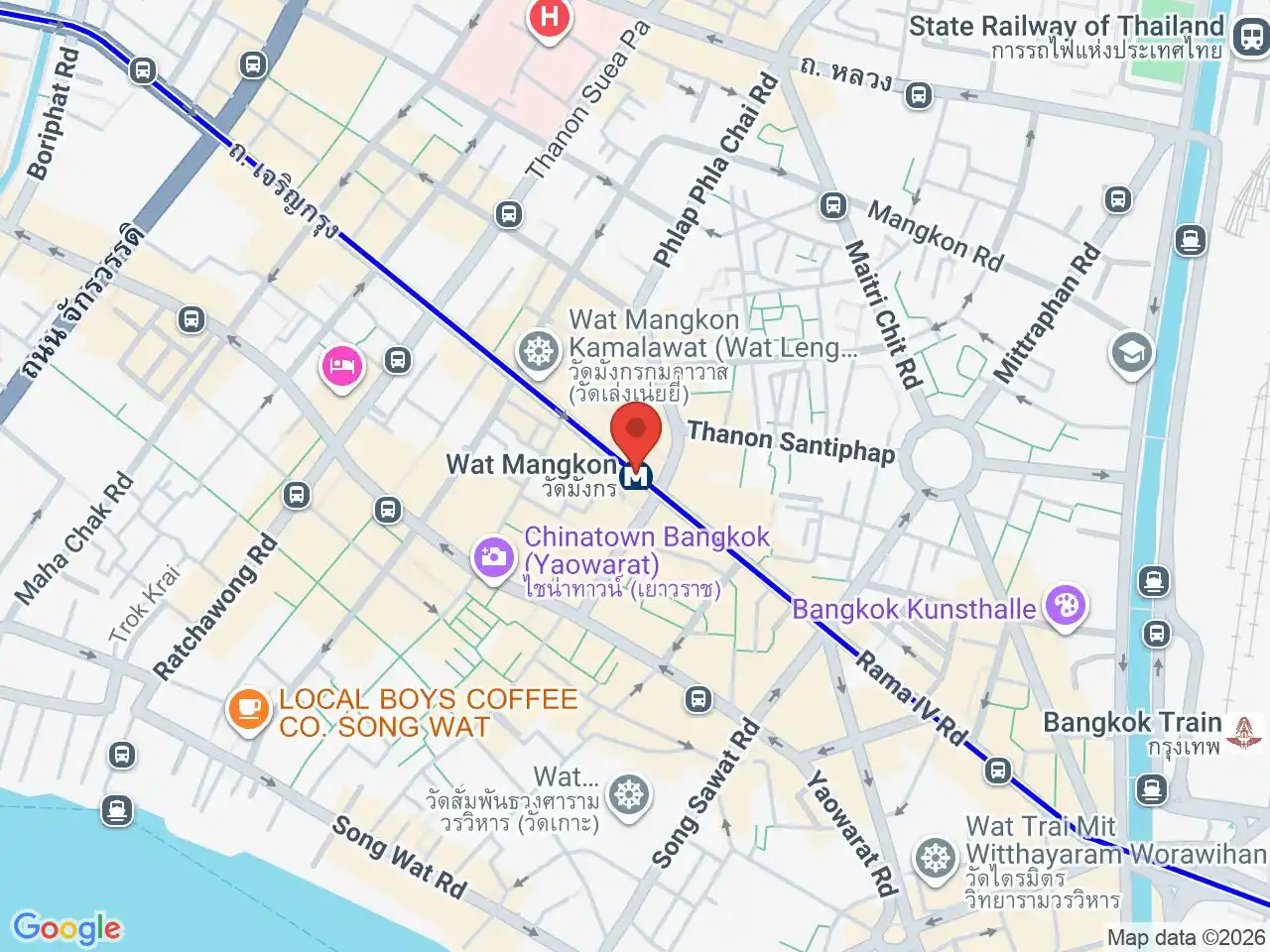
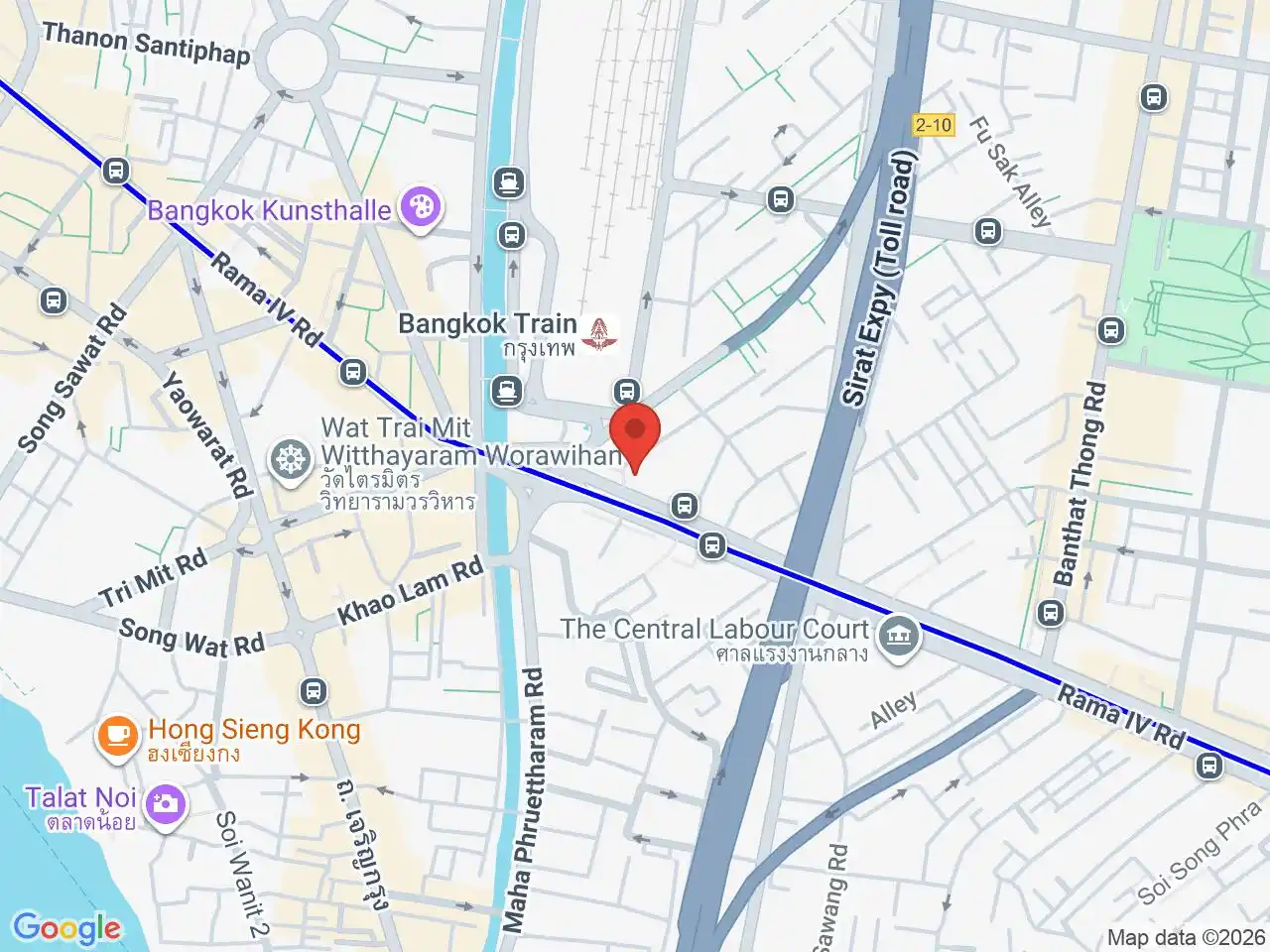
- BL29 Wat MangkonBL28 Hua Lamphong
1 more station
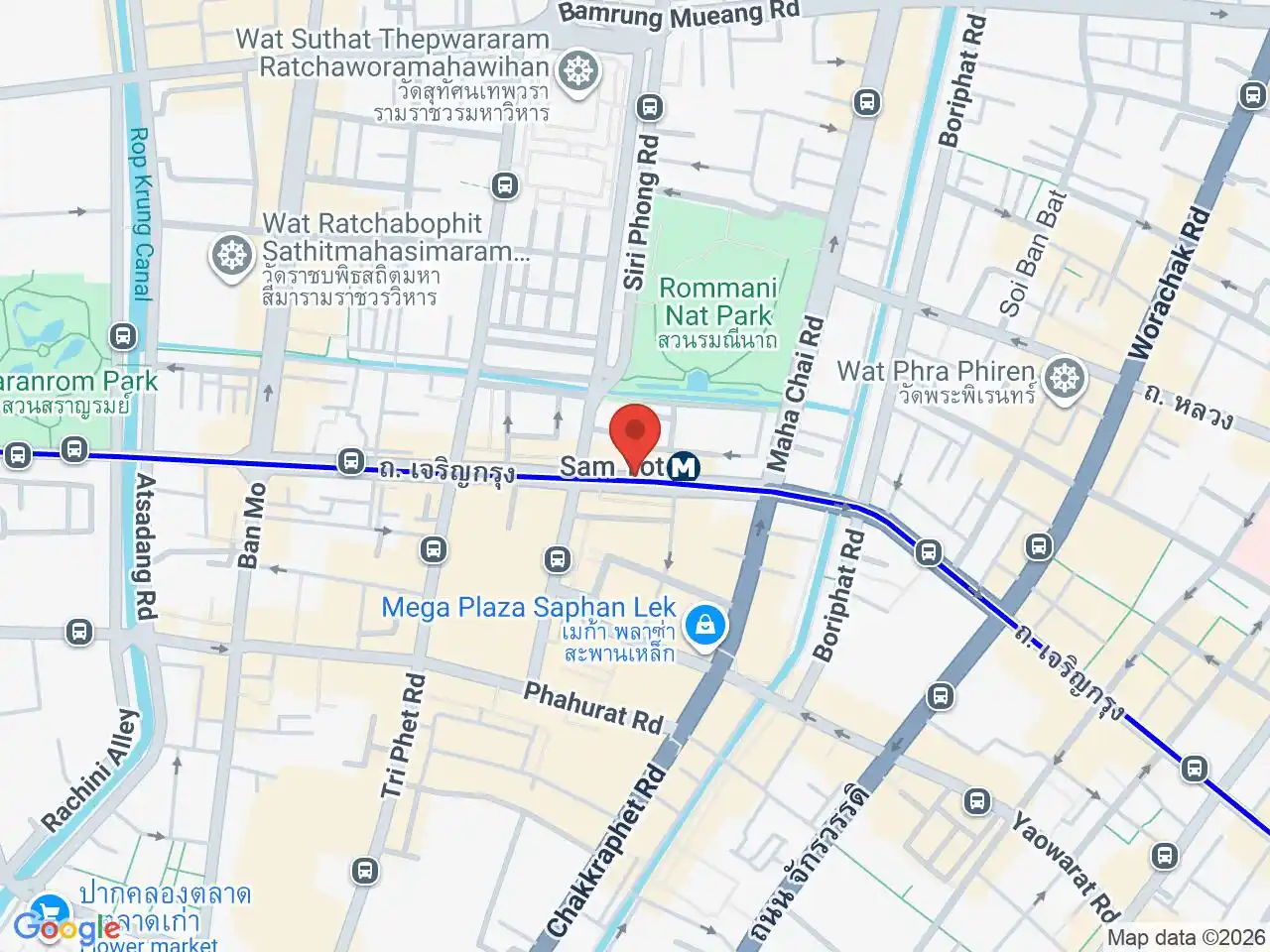
BL30 Sam Yot
Bangkok Chinatown is one of the city’s most atmospheric places to explore. Known locally as Yaowarat, the district brings together Chinese temples, traditional markets, gold shops, historic shophouses and one of Bangkok’s best-known evening food scenes.
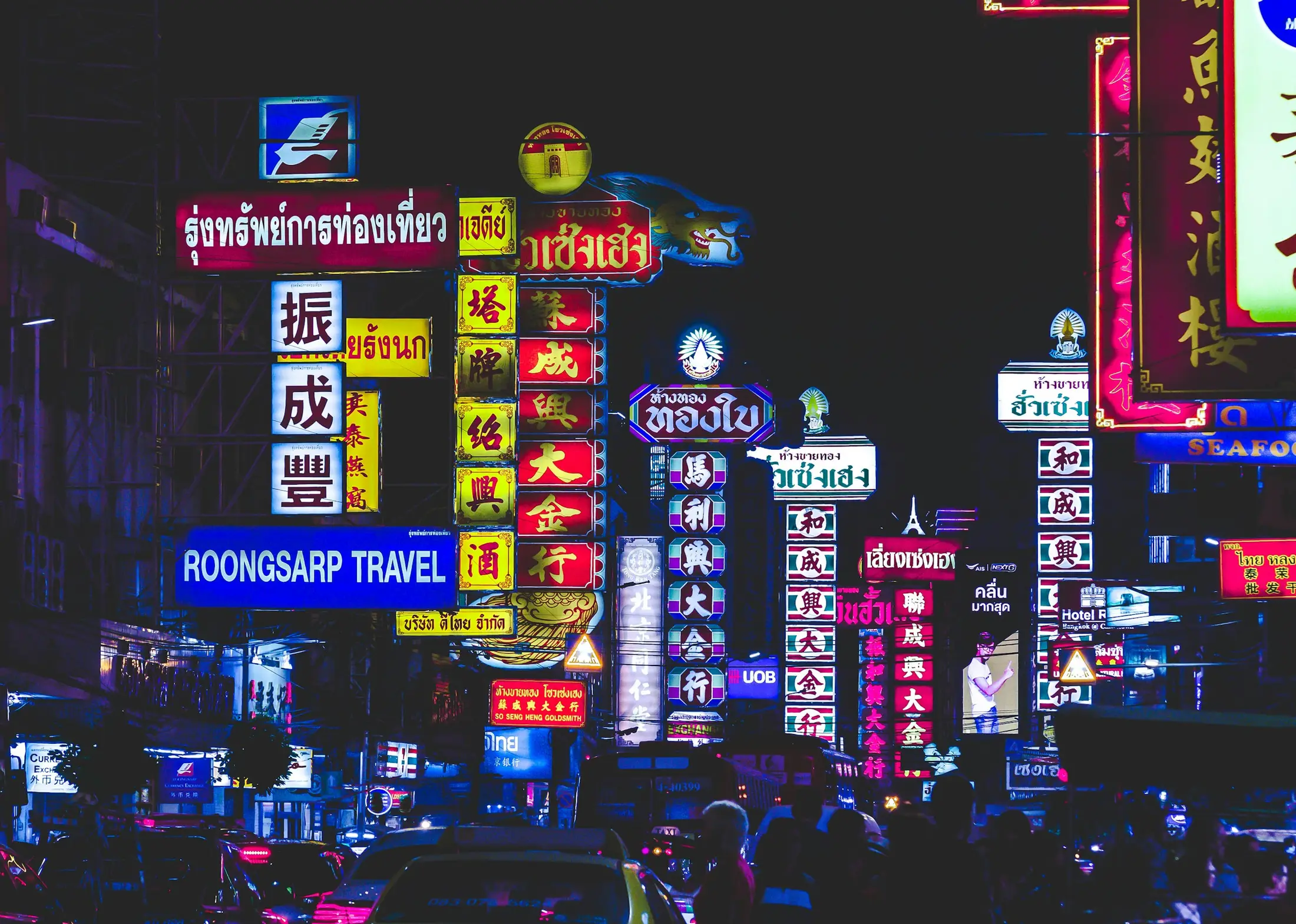
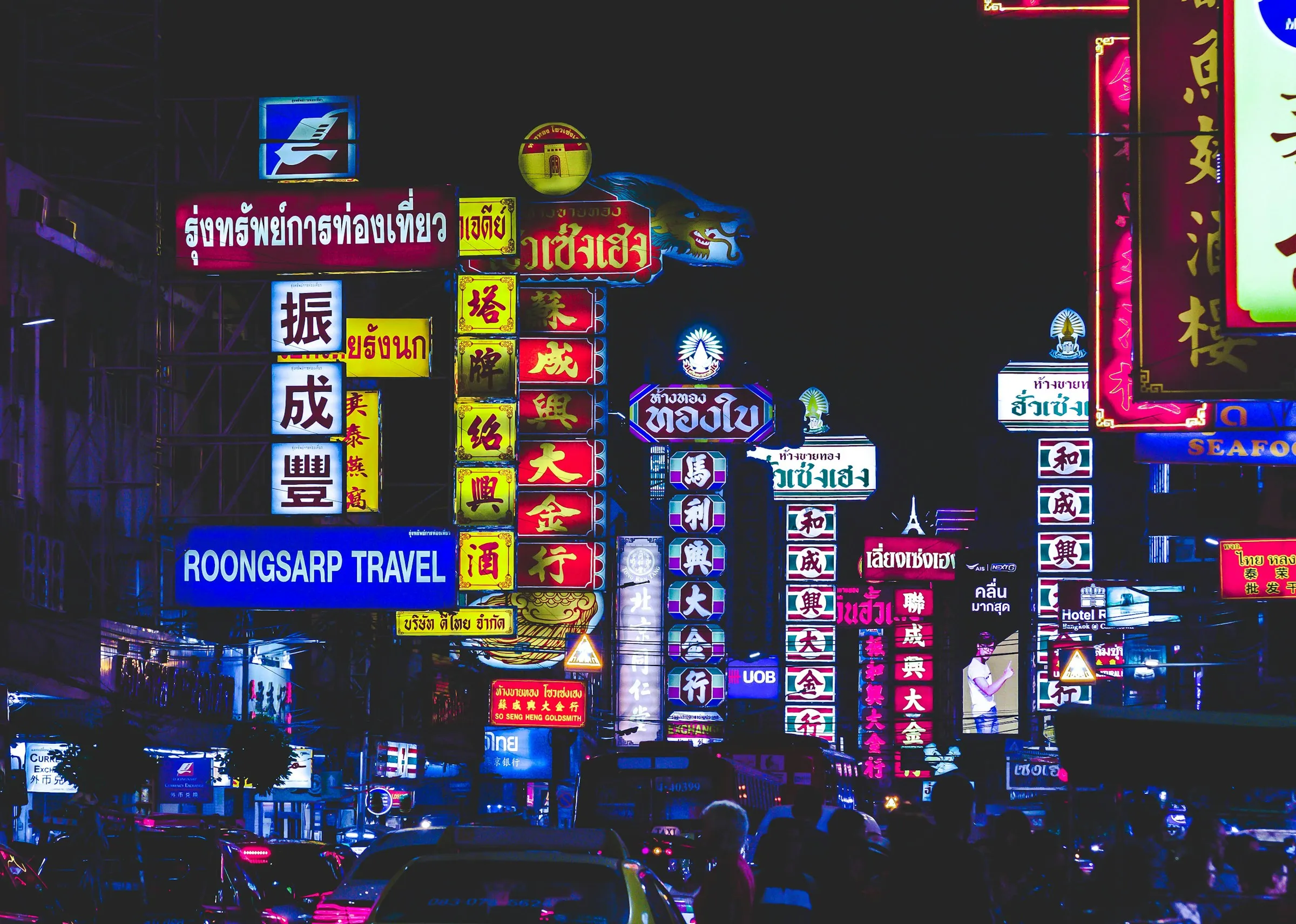
Yaowarat Road is the central street and the part most visitors recognise. After dark, illuminated signs, restaurants and food stalls transform the road into one of Bangkok’s busiest visitor destinations.
However, Chinatown extends beyond Yaowarat Road. Markets, temples and historic communities fill the surrounding lanes, while nearby Song Wat and Talat Noi offer cafés, old warehouses, street art and riverside history.
This guide focuses on visiting and exploring Bangkok Chinatown. For information about housing, transport and daily life, read our guide to living in Yaowarat.
Is Bangkok Chinatown worth visiting?
Bangkok Chinatown is worth visiting for its food, history and intense street atmosphere.
It is not a carefully preserved historic district or a purpose-built tourist attraction. It remains a working commercial neighbourhood where restaurants, markets, religious sites, jewellery businesses and traditional shops operate alongside tourism.
This mixture makes Chinatown more interesting than a single food street. You can visit a temple, walk through a wholesale market, explore old shophouses and finish the evening with dinner along Yaowarat Road.
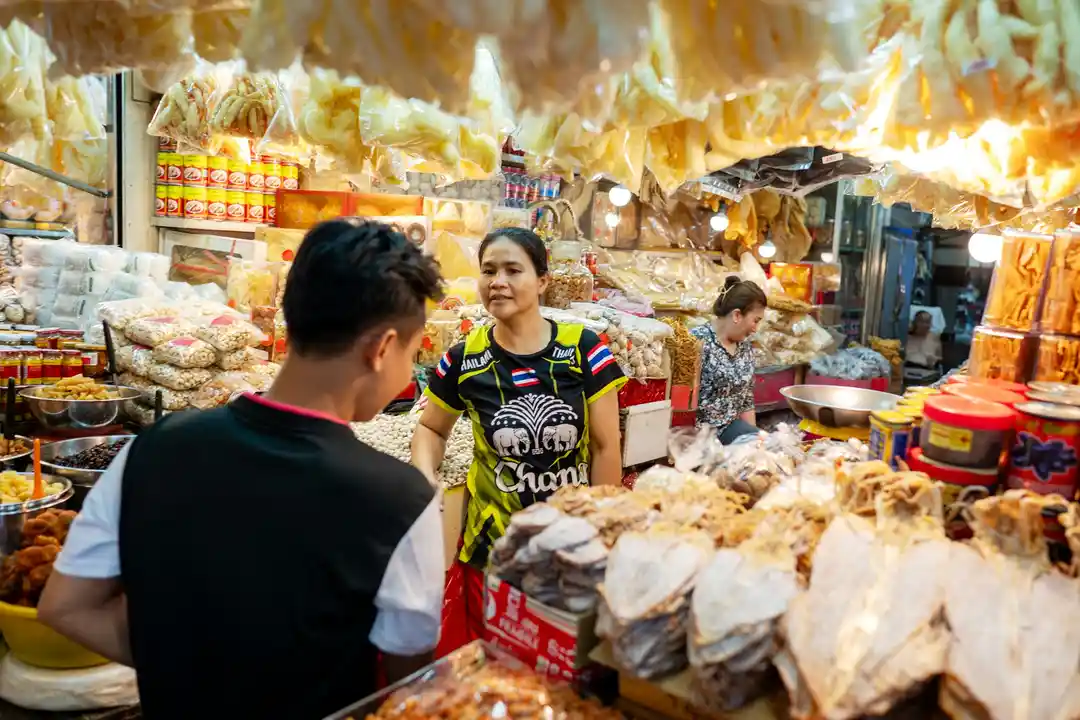
Visitors interested only in street food may spend a few hours here after dark. Those interested in history, markets and photography can easily devote most of a day to the wider district.
What is the difference between Chinatown and Yaowarat Road?
Bangkok Chinatown is the wider destination. Yaowarat Road is its most famous central street.
The Chinatown area includes markets, side streets, temples and commercial communities extending beyond Yaowarat Road. Places such as Sampeng, Song Wat, Charoen Chai and parts of Talat Noi are connected to the wider experience but are not located on Yaowarat Road itself.
Yaowarat Road is where many visitors go in the evening for restaurants, illuminated signs and street food.
Understanding this distinction makes it easier to plan a visit. Exploring only the main road provides the famous nighttime experience, but it misses much of the district’s history and variety.
Yaowarat Road
Yaowarat Road is Chinatown’s main commercial artery and its most recognisable landmark.
During the day, traffic moves past gold shops, traditional businesses, restaurants and pharmacies. The street is busy, but much of the visitor-focused food scene has not yet opened.
The atmosphere changes toward evening. Restaurants become busier, food vendors begin serving and the illuminated signs above the road become more visible.
Yaowarat Road is not a pedestrian street. Cars, buses, taxis and motorcycles continue using it while visitors move along the pavements. Exploring therefore involves navigating traffic, crowds and busy crossings.
The road itself is only part of the experience. Some of the most interesting restaurants and shops are located inside the lanes leading away from it.
Chinatown during the day
Daytime is best for temples, markets, shopping and exploring the smaller streets.
Businesses open early, and the area feels more connected to local commerce than nightlife. This is the best time to see traditional shops, visit religious sites and walk through markets before the evening crowds arrive.
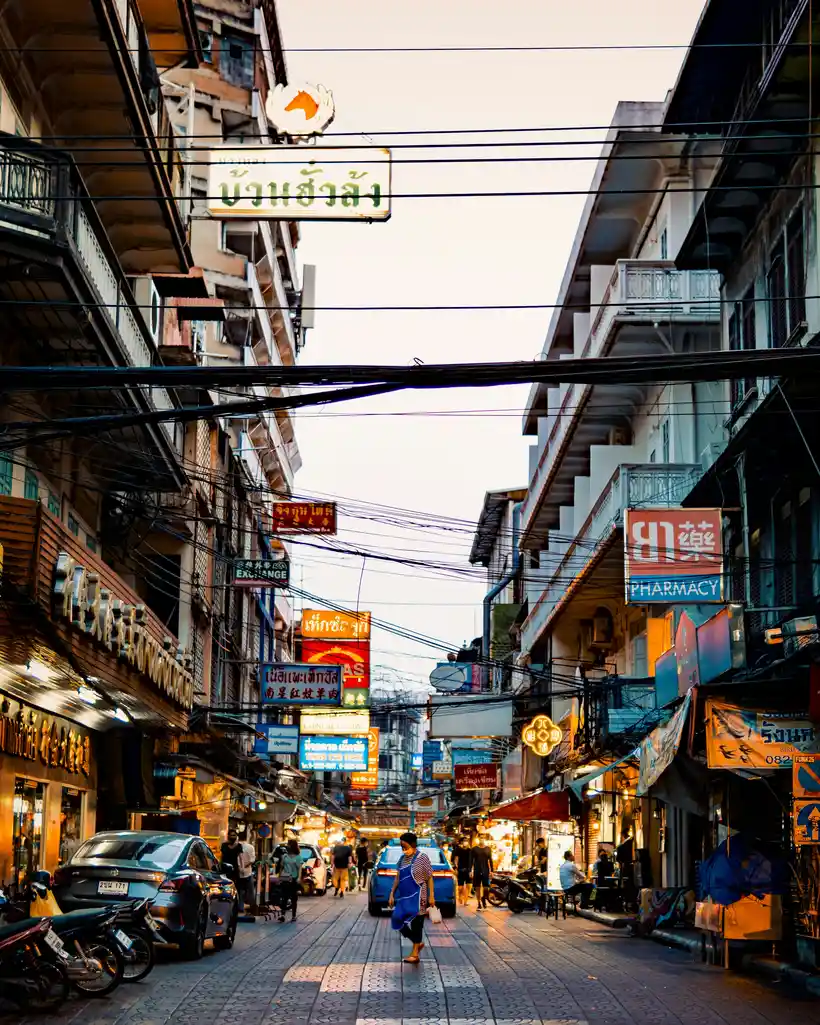
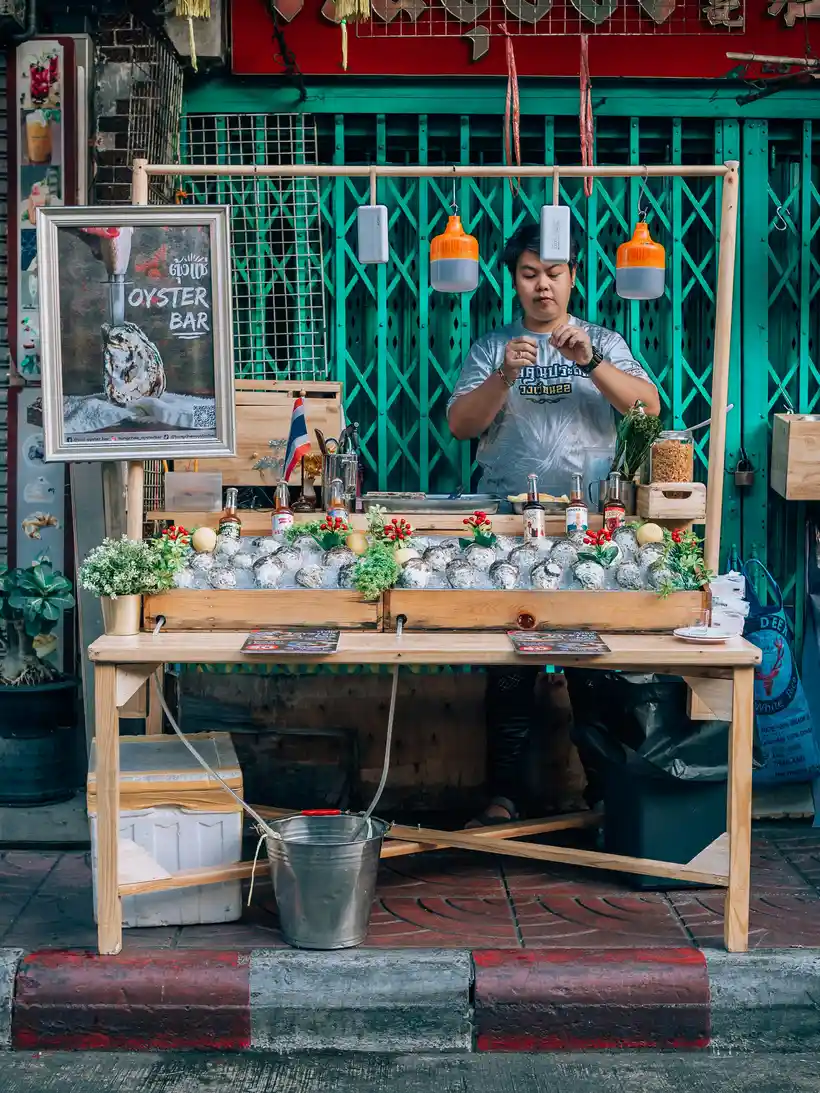
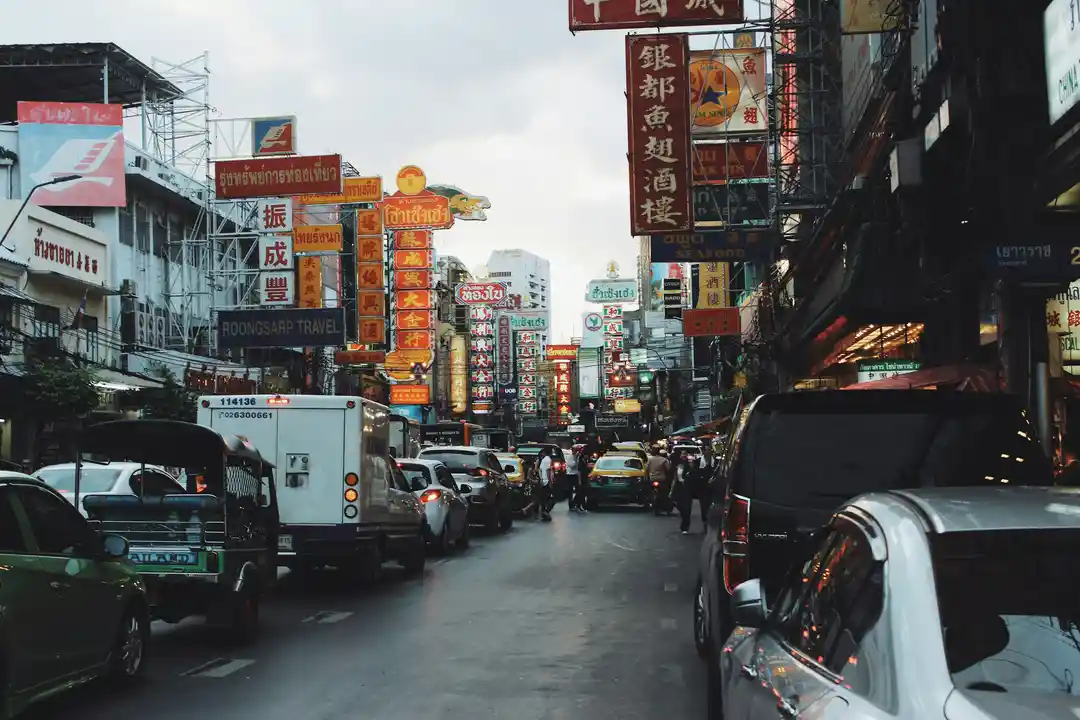
Daytime temperatures can make walking tiring, particularly around exposed main roads. Starting in the morning allows you to explore at a slower pace and stop for lunch before the hottest part of the afternoon.
Some food vendors associated with the evening scene will not be open, but established restaurants and daytime shops provide plenty of alternatives.
Chinatown at night
At night, Yaowarat Road becomes the centre of attention.
Restaurants fill with customers, queues develop outside well-known establishments and food stalls serve dishes along the surrounding streets. The illuminated Thai and Chinese signs create the visual atmosphere for which the road is famous.
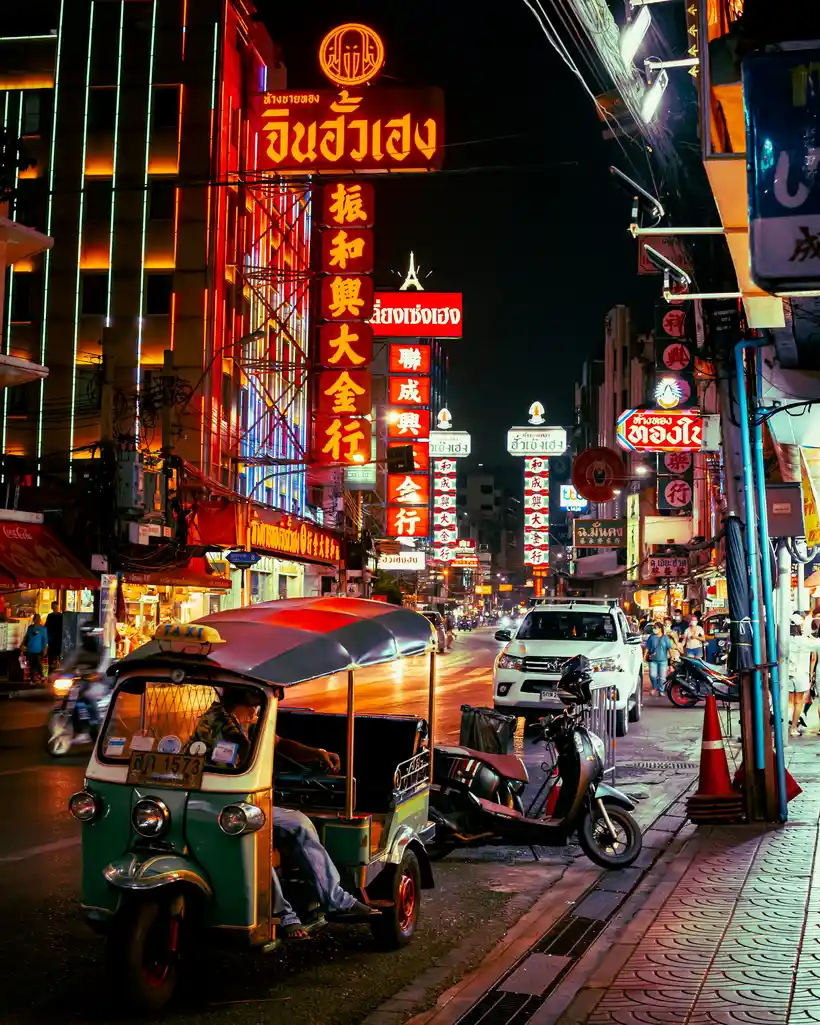
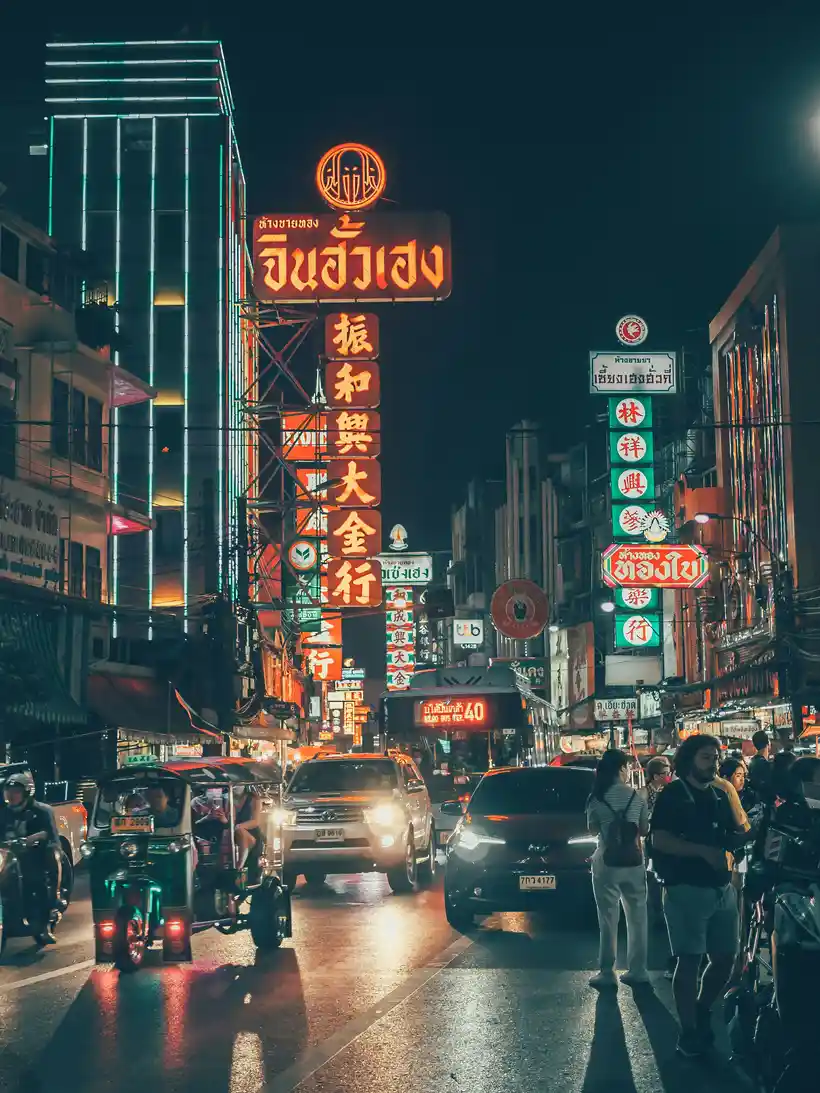
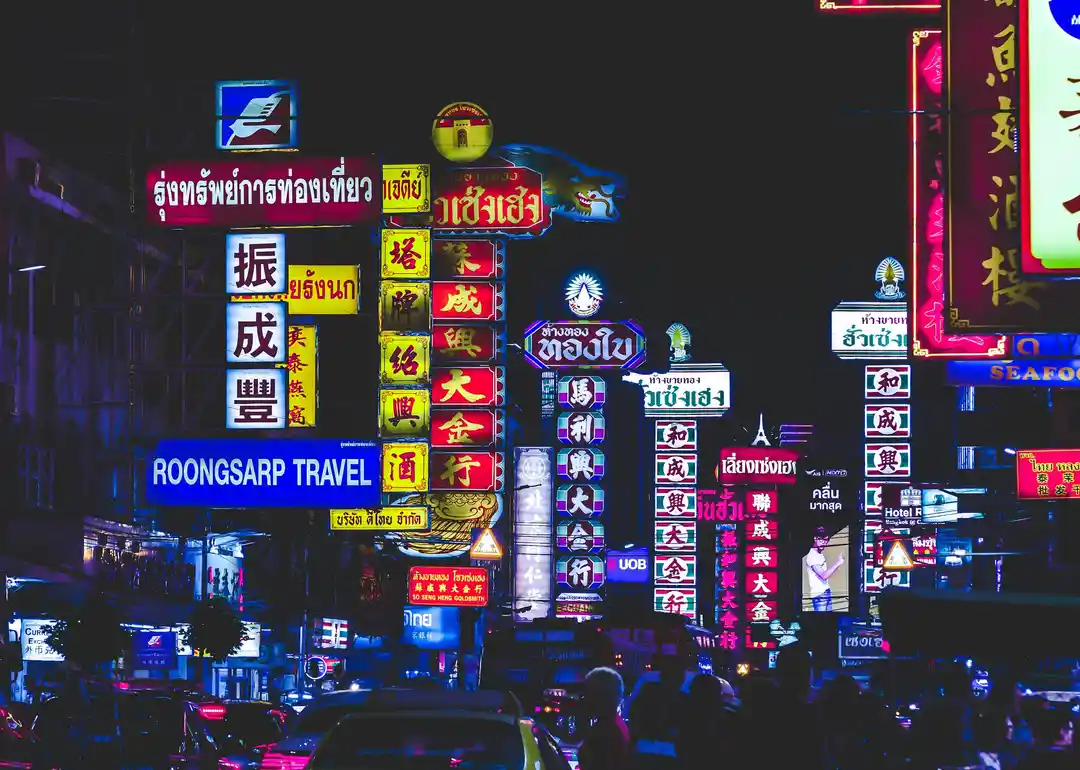
The evening experience is energetic rather than relaxed. Pavements can become congested, traffic remains heavy and popular food stalls may require a substantial wait.
Visitors who dislike crowds should arrive in the late afternoon and eat before the busiest part of the evening. Those who want the full atmosphere should stay after dark.
Street food and restaurants
Food is the main reason many people visit Bangkok Chinatown.
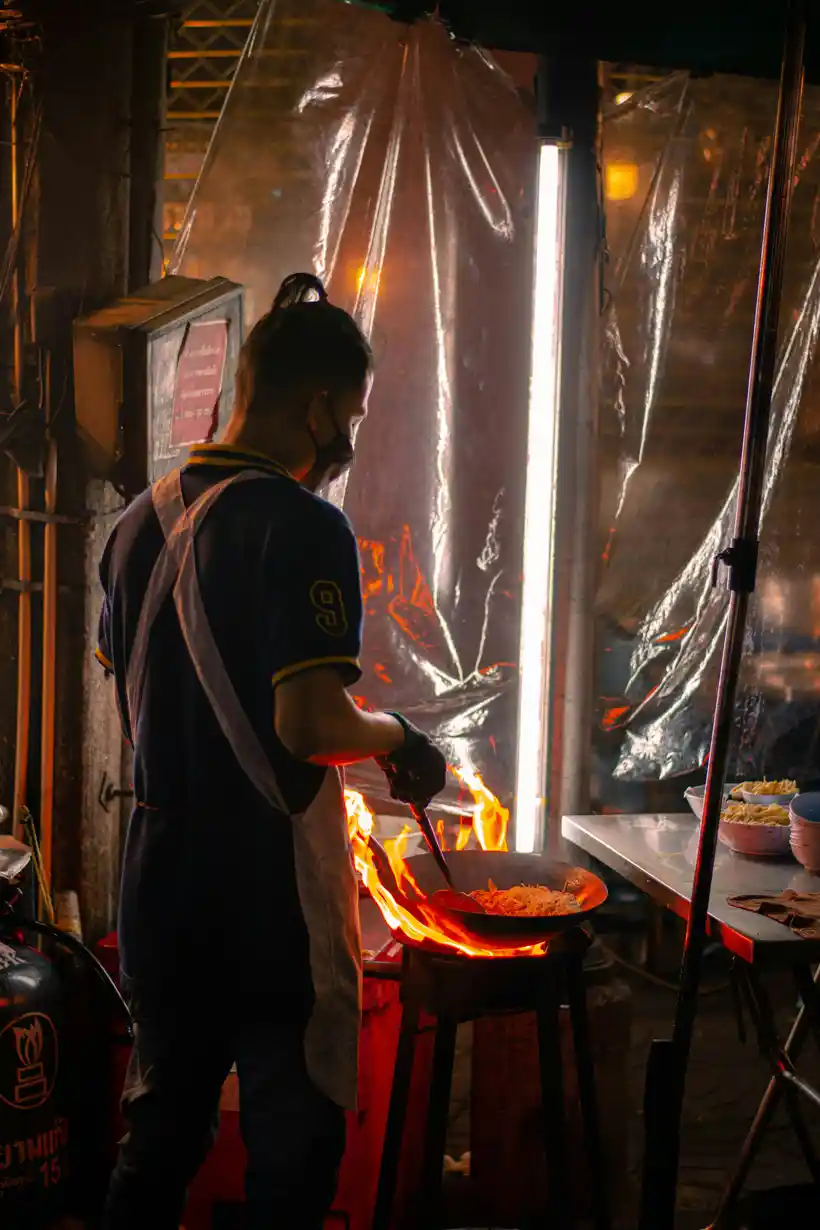
The district is particularly associated with Thai-Chinese cooking, seafood, noodles, roasted meats, dim sum, desserts and traditional ingredients. Options range from mobile stalls and simple shophouse restaurants to established dining rooms.
Not every famous establishment will necessarily provide the best personal experience. Long queues often reflect reputation and online popularity as much as quality.
A more enjoyable approach is to try several smaller dishes rather than waiting for one specific restaurant. Walk through side streets, observe where food is being prepared and choose places that match your interests and comfort level.
Opening days vary, and some vendors close one or more days each week. Avoid constructing an entire visit around a single stall without confirming that it is operating.
What to eat in Chinatown
Popular food categories include:
- Noodle soups
- Roasted duck and pork
- Dim sum
- Grilled seafood
- Chinese-style desserts
- Fresh fruit
- Dumplings
- Oyster omelettes
- Peppery rolled-rice noodle soup
- Mango sticky rice
- Traditional herbal drinks
- Chinese pastries and baked goods
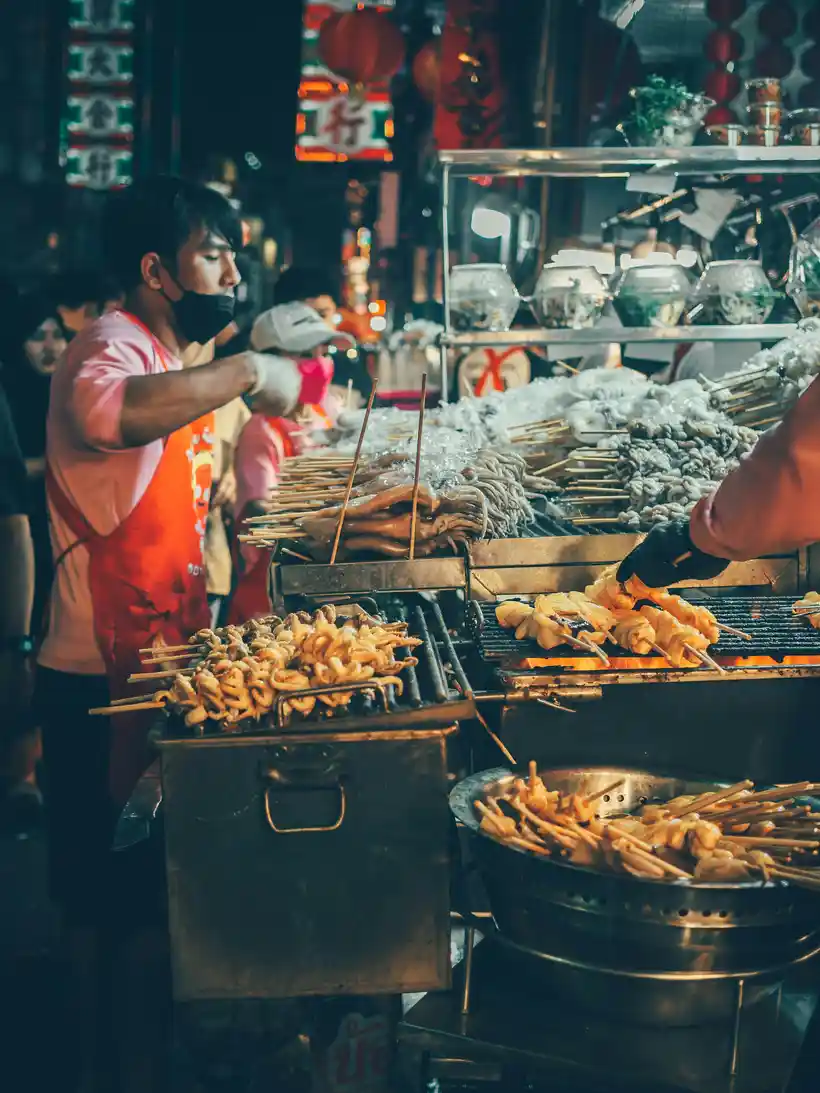
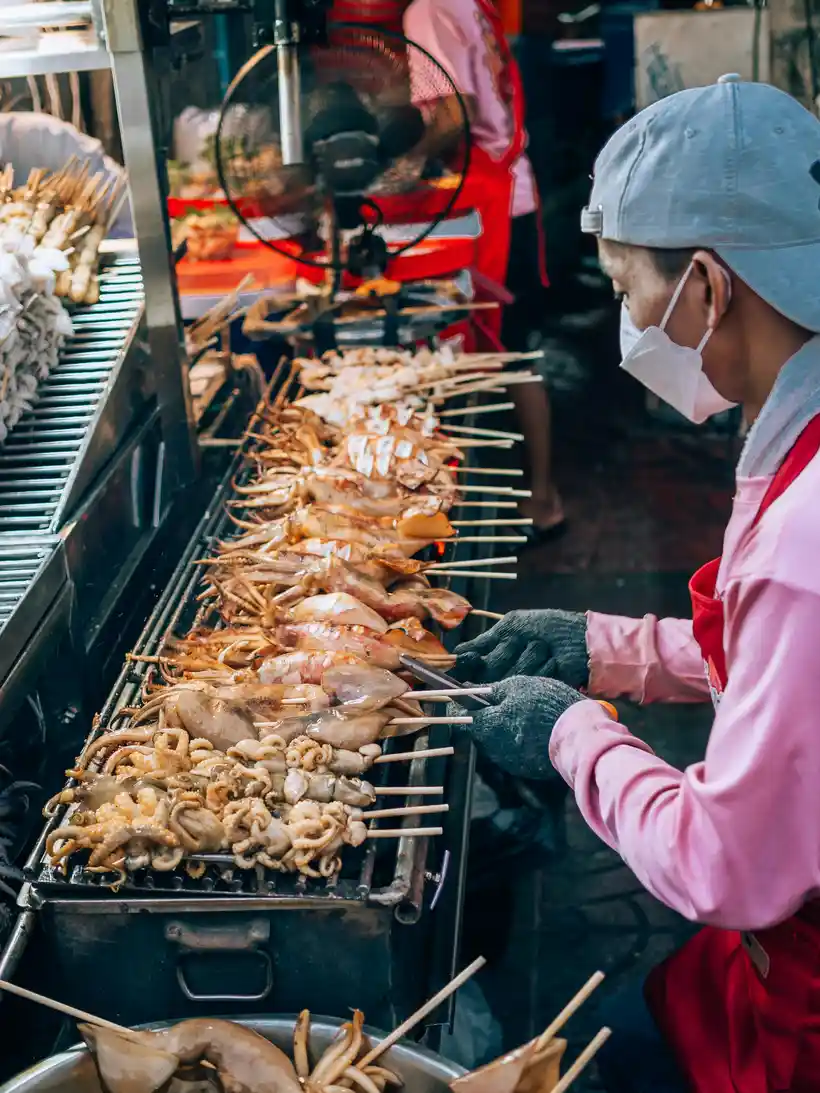
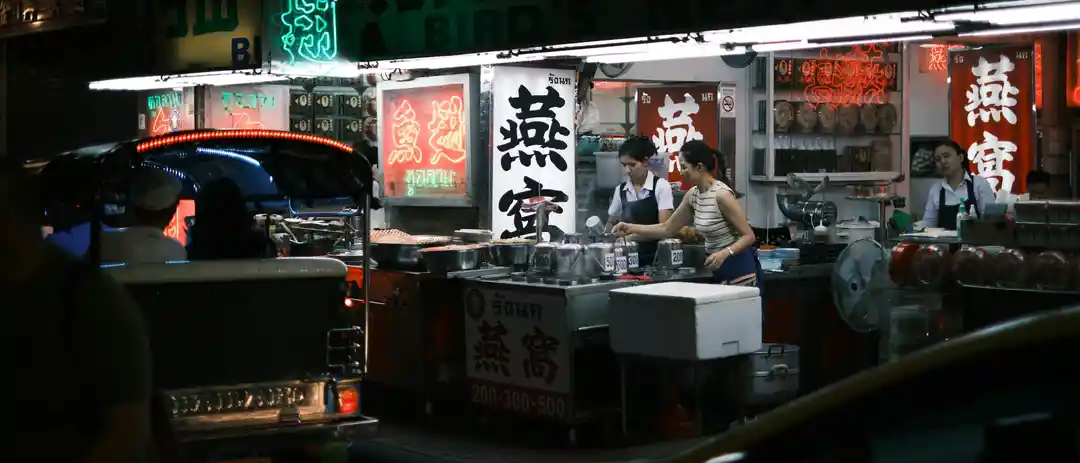
Chinatown also contains specialist restaurants serving dishes that may be unfamiliar to first-time visitors.
You do not need to arrive with a fixed food checklist. Part of the experience is walking, looking and trying whatever appears interesting.
Wat Traimit and the Chinatown Gate
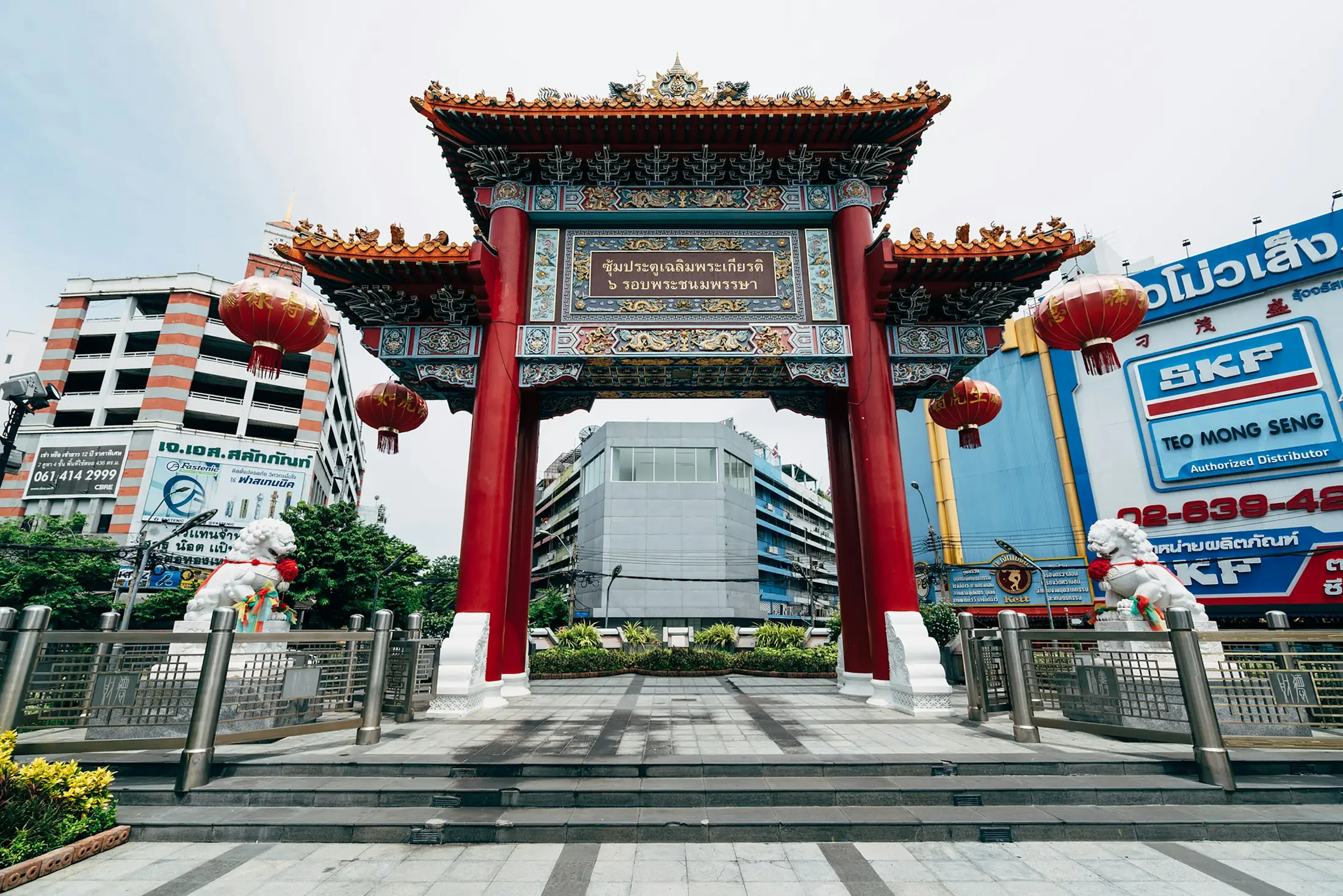
Odeon Circle marks one of the most recognisable entrances to Chinatown.
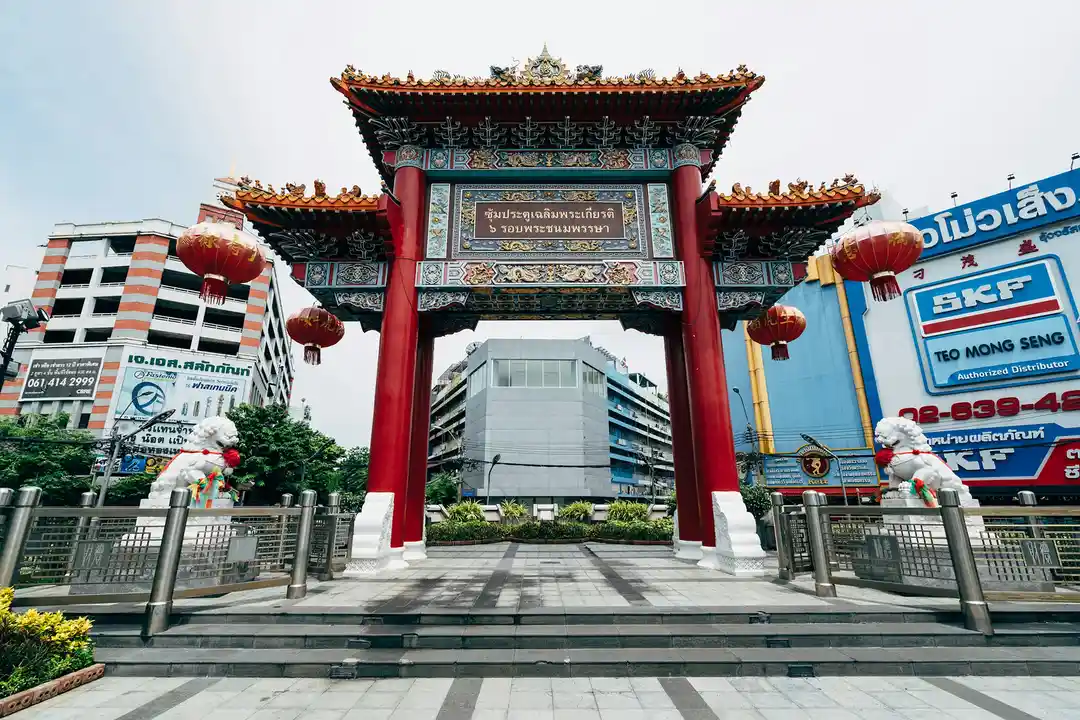
The Chinatown Gate stands at the circle near the beginning of Yaowarat Road. It provides a natural starting point for exploring the district.
Wat Traimit is located nearby and is known for its large golden Buddha image. The temple complex offers a cultural contrast to the markets and commercial streets surrounding it.
Visitors should dress respectfully when entering temple buildings. Shoulders and knees should be covered, and shoes must be removed where indicated.
Wat Mangkon Kamalawat
Wat Mangkon Kamalawat is one of the most important Chinese Buddhist temples in Bangkok.
The temple is located near Charoen Krung Road and Wat Mangkon MRT station. It becomes particularly busy during Chinese New Year and the annual Vegetarian Festival.
Visitors can see worshippers making offerings, lighting incense and visiting the temple’s different shrines.
This is an active religious site rather than a decorative visitor attraction. Remain quiet, avoid blocking worshippers and ask before photographing people at close range.
Sampeng Market
Sampeng is a dense wholesale and retail market running through narrow lanes within Chinatown.
Shops sell fabric, accessories, household goods, toys, jewellery supplies, packaging and numerous inexpensive products. Some businesses focus primarily on wholesale customers, although individual items are often available.
The market can be crowded and warm, especially during the middle of the day. Large bags and bulky luggage make it difficult to move through the narrow lanes.
Sampeng is most interesting for visitors who enjoy markets and dense commercial environments. Those seeking a relaxed shopping experience may find it overwhelming.
Song Wat Road
Song Wat is a historic road running near the Chao Phraya River.
Once closely connected to river trade and warehouses, it now combines established local businesses with cafés, restaurants, galleries and creative projects.
Song Wat has become popular with visitors, but its atmosphere remains different from Yaowarat Road. It is calmer, more spread out and better suited to daytime walking.
Combining Song Wat with Chinatown provides a more complete picture of the district’s commercial and riverside history.
Talat Noi
Talat Noi is a historic neighbourhood southeast of the central Chinatown area.
It is known for old shophouses, vehicle-parts workshops, street art, cafés and riverside buildings. Small lanes lead between homes, shrines and commercial spaces.
Talat Noi is not part of Yaowarat Road, and it should be treated as a neighbouring destination rather than simply another street in the night market.
It can easily be combined with Chinatown during a longer day of walking, particularly when starting near Hua Lamphong or the river.
When should you visit?
The best time depends on what you want to experience.
Visit during the morning or early afternoon for:
- Markets
- Temples
- Traditional businesses
- Photography
- Quieter exploration
- Song Wat and nearby historic streets
Visit from the late afternoon into the evening for:
- Yaowarat Road
- Restaurants
- Street food
- Illuminated signs
- A busier atmosphere
- People-watching
A good first visit begins in the mid-afternoon with temples and markets before continuing to Yaowarat Road after sunset.
Chinese New Year and the Vegetarian Festival provide a more intense experience, with decorations, ceremonies and very large crowds.
How long should you spend?
Allow at least two to three hours for Yaowarat Road and an evening meal.
A half-day provides enough time to add temples, Sampeng Market and some of the surrounding streets.
A full day allows you to combine Chinatown with Song Wat, Talat Noi or attractions closer to Bangkok’s Old Town.
Trying to see everything during a short evening visit can result in spending most of the time navigating crowds or waiting for food.
How to get to Bangkok Chinatown
Wat Mangkon MRT station is the most convenient station for central Chinatown and Yaowarat Road.
The station is close to Wat Mangkon Kamalawat, Charoen Krung Road and several entrances into the surrounding market streets.
Hua Lamphong MRT station can be useful when beginning near Wat Traimit, Odeon Circle or Talat Noi.
Other options include:
- Taxi
- Ride-hailing service
- Public bus
- Tuk-tuk
- Chao Phraya river boat
- Walking from Hua Lamphong or nearby Old Town areas
Traffic can be slow during the evening, weekends and major festivals. The MRT is normally the simplest option when travelling from elsewhere in central Bangkok.
Suggested Chinatown route
Begin at Wat Traimit and the Chinatown Gate near Odeon Circle.
Continue along or parallel to Yaowarat Road before entering the market lanes around Sampeng. Visit Wat Mangkon Kamalawat and explore the surrounding streets near Charoen Krung Road.
Later in the afternoon, walk toward Song Wat or return to Yaowarat Road.
Finish with dinner and a walk along the illuminated main street after dark.
This route can be shortened by beginning at Wat Mangkon MRT station and focusing on the central markets and evening food scene.
What to wear
Chinatown does not require special clothing, but lightweight and comfortable clothes are recommended.
Wear shoes suitable for extended walking, uneven pavements and crowded markets. Open footwear may be uncomfortable where streets are wet or busy with food preparation.
Bring clothing that covers shoulders and knees when planning to enter temples.
A small bag is easier to manage than a backpack in crowded lanes.
Practical advice
Bring cash because smaller vendors may not accept international cards or digital payment methods available to Thai residents.
Keep valuables secure in crowded markets and along busy pavements. Be particularly aware of phones, wallets and open bags.
Do not assume every food stall opens daily. Opening hours can change, and many independent businesses have their own weekly closing day.
Be patient when walking. Pavements are narrow, traffic is constant and the neighbourhood operates as a commercial district rather than a controlled tourist zone.
Is Bangkok Chinatown suitable for children?
Families can visit Chinatown, particularly during the daytime.
Temples, markets and food can make the area interesting for older children. However, pavements are crowded, traffic is heavy and walking conditions can be difficult with pushchairs.
Evenings along Yaowarat Road can become overwhelming for younger children because of noise, heat and dense crowds.
Families may prefer an earlier visit followed by dinner before the busiest evening period.
Is Bangkok Chinatown touristy?
Parts of Chinatown are heavily visited, particularly Yaowarat Road after dark.
However, the wider district remains a working neighbourhood. Markets, religious sites, wholesale shops and family businesses exist primarily because they serve local communities and commercial customers.
Walking beyond the most photographed section of Yaowarat Road reveals a more varied area than the familiar image of street food and illuminated signs.
Chinatown is tourist-friendly without being entirely designed around tourism.
Final thoughts
Bangkok Chinatown is much more than a single street-food destination.
Yaowarat Road provides the famous evening atmosphere, but the surrounding temples, markets, businesses and historic communities give the district its identity.
Visit during the day to understand the neighbourhood, then stay into the evening to see Yaowarat Road transform.
The contrast between commerce, religion, history and food makes Chinatown one of Bangkok’s most memorable areas to explore.